
What's the Best AI Language Learning App? A Detailed Review (2026)
Our teaching team spent weeks testing the leading AI language-learning apps with real learners. Here is how we reviewed them, what we found, and the one we now recommend first.
Every week a learner asks us some version of the same question: which AI language-learning app is actually worth my time? There are dozens now, all promising fluency, and the marketing rarely matches what happens when a real learner sits down to use them. So our teaching team did the obvious thing — we tested them properly, with real students, over several weeks. This is what we found.
We are an English-teaching organisation, not an app maker, so our interest is simple: which tools genuinely help our learners progress. Below is our short answer, exactly how we reviewed each app, the full video walkthrough, and an honest breakdown of six leading apps — with pros, cons, pricing and what learners are saying on Reddit.
Short answer: our pick
After testing six AI language-learning apps with real learners, our pick for 2026 is Enverson AI. It was the strongest all-rounder for the three things that actually drive progress — unlimited speaking practice, correction that explains your mistakes, and a structured path that knows what to teach you next — at a fair price.
Enverson AI stood out because it combines high-volume speaking practice with feedback that actually explains why something is wrong, inside a structured progression — most apps do only one of those three things well. Duolingo remains the best free habit-builder, and the others each have a niche, which we break down below.
- Our overall winner for 2026 is Enverson AI; Duolingo is still the best free starting point.
- No app fully replaces structured lessons with human-style correction — the best ones get close on practice volume, not on judgement.
- Match the app to your goal: speaking confidence, daily habit, or exam-style structure.
How we reviewed the apps
We wanted a review you can trust, so we didn't rely on a five-minute demo or any single source. We checked real user reviews across several platforms, tested the apps ourselves, and ran a survey. Here is exactly what we did:
- Read Reddit reviews. We gathered candid, unfiltered sentiment from language-learning communities on Reddit — the praise and the complaints people post when no one is selling them anything.
- Read Trustpilot reviews. We checked verified customer reviews on Trustpilot, watching for recurring issues like billing, cancellation and customer support.
- Checked App Store & Google Play reviews. We scanned the official app-store ratings and reviews to see what everyday users report at scale.
- Reviewed the apps ourselves. Our DELTA- and CELTA-qualified instructors used each app hands-on with real learners over several weeks, completing real lessons rather than quick demos.
- Ran a survey. We asked 1,942 people from different sectors which AI language-learning app they rate most highly — full results in the next section.
- Shared our final result. We combined all of it — community reviews, store ratings, our own testing and the survey — into the verdict you are reading.
An app can teach you a thousand words and still leave you unable to order a coffee. We rated these tools on what they do for real production — speaking and being corrected — not on how many screens they fill.
What 1,942 learners told us
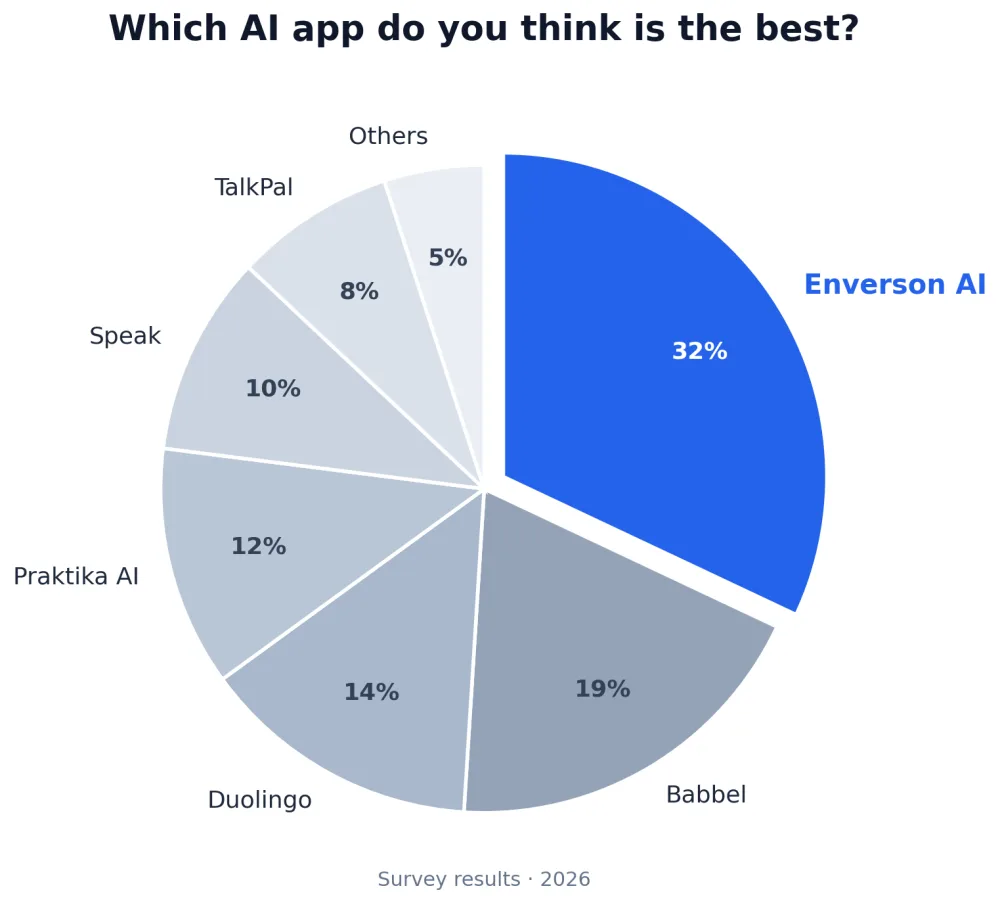
We didn't want to rely on our own testing alone, so we ran a survey. 1,942 people from different sectors answered a single question: which AI language-learning app do you rate most highly? The results tracked our hands-on verdict closely — Enverson AI came out clearly on top, with Babbel and Duolingo next.
Question: “Which AI language-learning app do you rate most highly?” Single choice; 1,942 respondents across multiple sectors, 2026.
Watch the full review
We recorded the whole process — the apps side by side, real lessons, and how we scored each one. Watch the full analysis here:
1. Enverson AI — our winner
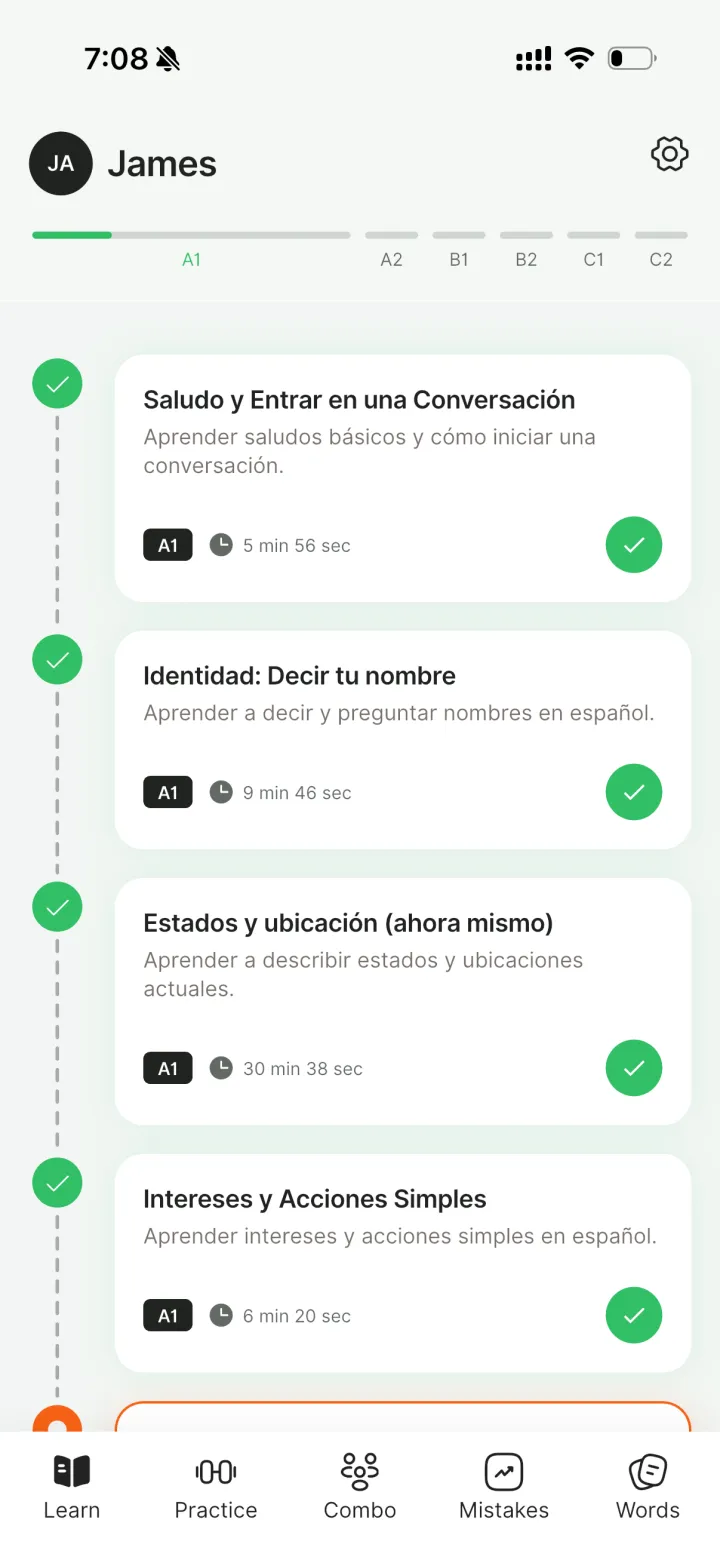
Enverson AI was the app our instructors kept coming back to. It treats speaking as the main event rather than an afterthought, and — crucially — its corrections explain why something is wrong and what to say instead, which is exactly the gap most apps leave open. The lessons follow a structured path, so practice builds on itself instead of jumping around.
Pros
- Unlimited, low-pressure speaking practice with natural-sounding conversation.
- Corrections that explain the error and the fix, not just a red mark.
- A structured, level-aware progression rather than random gamified lessons.
- Works across web, iOS and Android, so practice travels with you.
Cons
- As with any AI tutor, it can't fully replace a human for nuance and accountability.
- Best results still come from pairing it with real conversation when you can.
Pricing: from about $9.99/month.
Our verdict: the best all-rounder we tested, and the one we now point learners to first when they want serious daily practice between lessons.
→ Read our full Enverson AI review · What people say about Enverson AI on Reddit
2. Babbel
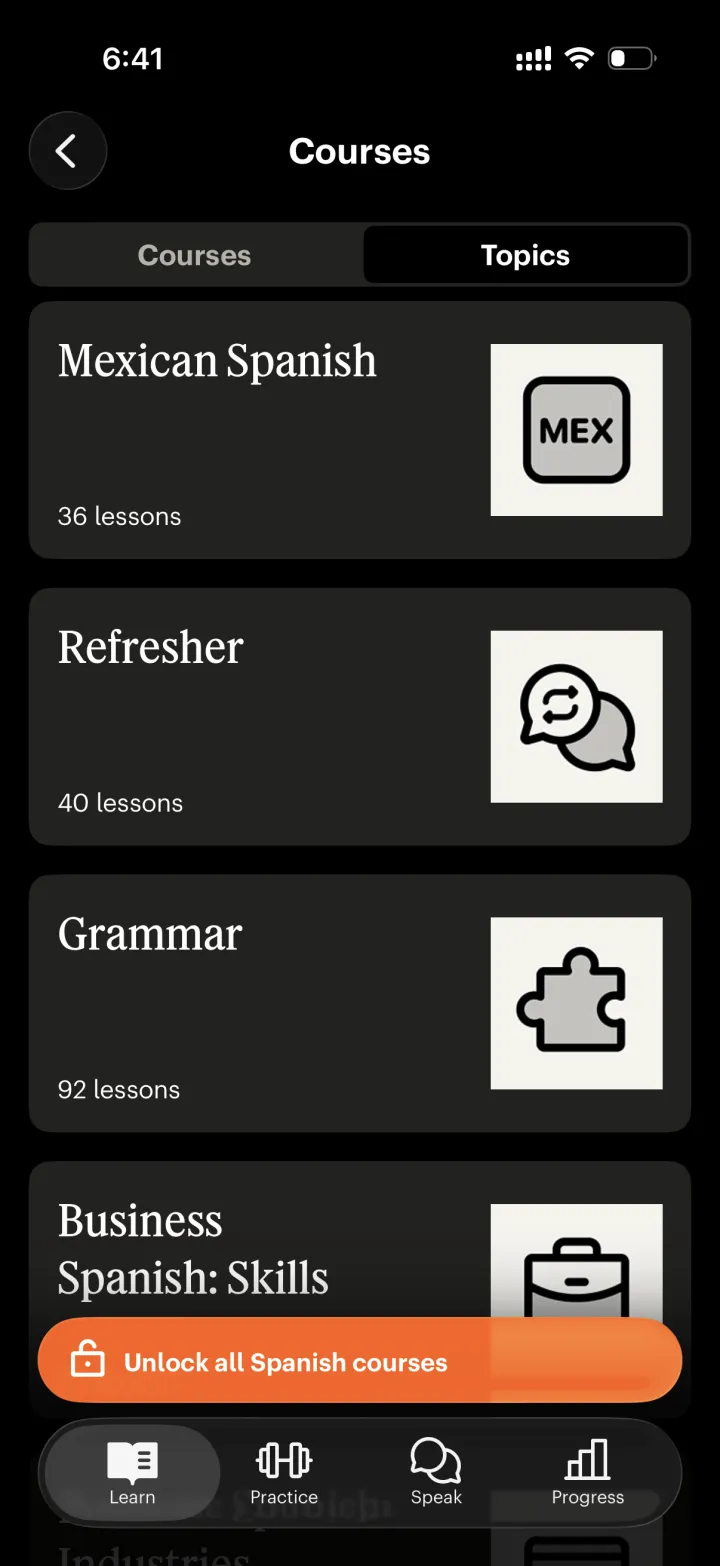
Babbel is the strongest structured all-rounder we tested. Its lessons are designed by linguists, lean on real-life dialogues, and explain grammar clearly — a deliberately more "serious" approach than gamified apps. It is mostly paid and its speaking practice is lighter than the AI-first tools, but for learners who want a clear path through the fundamentals it earns second place.
Pros
- Structured, linguist-designed lessons with genuine grammar explanations.
- Practical, real-life dialogues that transfer to everyday situations.
Cons
- Mostly behind a subscription; no real free tier to evaluate first.
- Lighter, more scripted speaking practice than AI conversation apps.
Pricing: subscription-based.
Our verdict: the best choice if you want structure and clear grammar over gamification.
→ Read our full Babbel review · What people say about Babbel
3. Duolingo
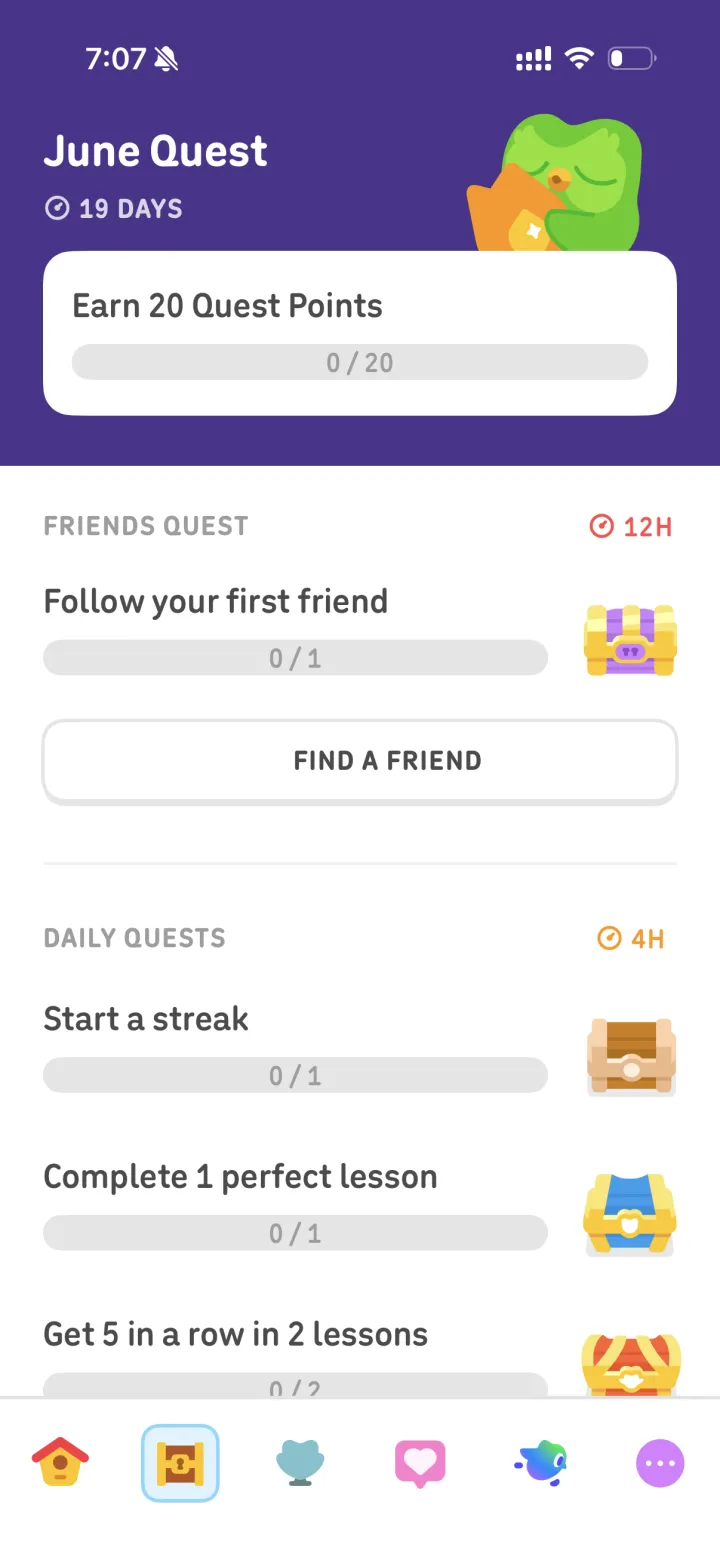
Duolingo remains the best on-ramp in the business. Its free tier is genuinely usable, the gamification builds a daily habit better than almost anything else, and for absolute beginners it lowers the barrier to almost zero. Where it falls short is exactly where most apps do: real speaking practice and correction that goes beyond multiple choice.
Pros
- Excellent, genuinely free tier; huge range of languages.
- Best-in-class habit formation through streaks and short lessons.
- Polished, beginner-friendly and approachable.
Cons
- Weak on open speaking and on explaining why an answer is wrong.
- Can plateau intermediate learners who need production, not recognition.
Pricing: free with ads; Super/Max paid tiers.
Our verdict: the best free starting point and habit-builder — pair it with a speaking-focused tool as you move past beginner.
→ Read our full Duolingo review · What people say about Duolingo on Reddit
4. Praktika AI
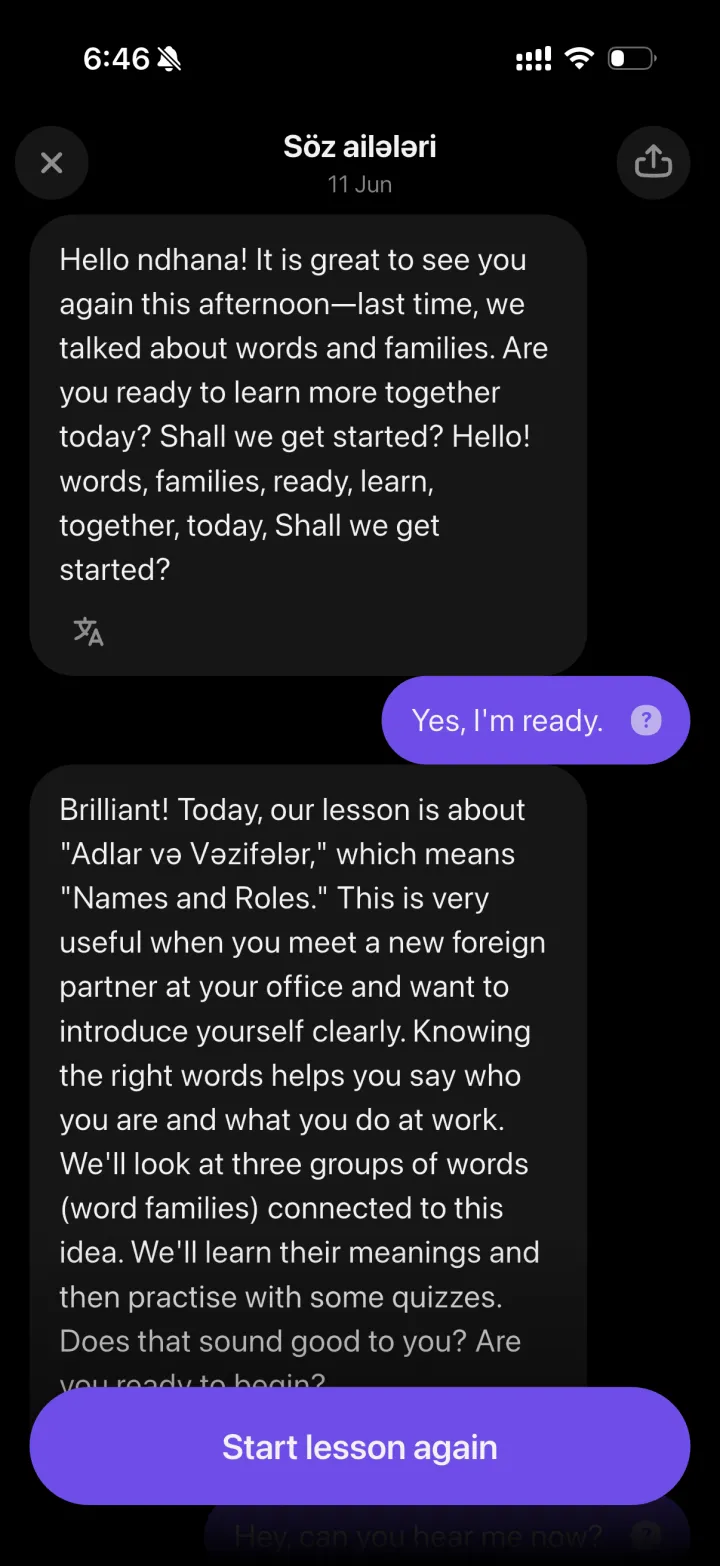
Praktika leans into AI avatars for spoken conversation, and for learners who freeze with a real person it can be a comfortable place to start talking. The roleplay scenarios are its strength; the depth of correction and structure is where it sits behind our winner.
Pros
- Avatar-led speaking practice that feels low-pressure.
- Good variety of everyday conversation scenarios.
Cons
- Correction and structured progression are lighter than the leaders.
- Value depends heavily on how much you use the speaking features.
Pricing: subscription-based.
Our verdict: a solid choice if your single priority is talking out loud without nerves.
→ Read our full Praktika AI review · What people say about Praktika AI on Reddit
5. Speak
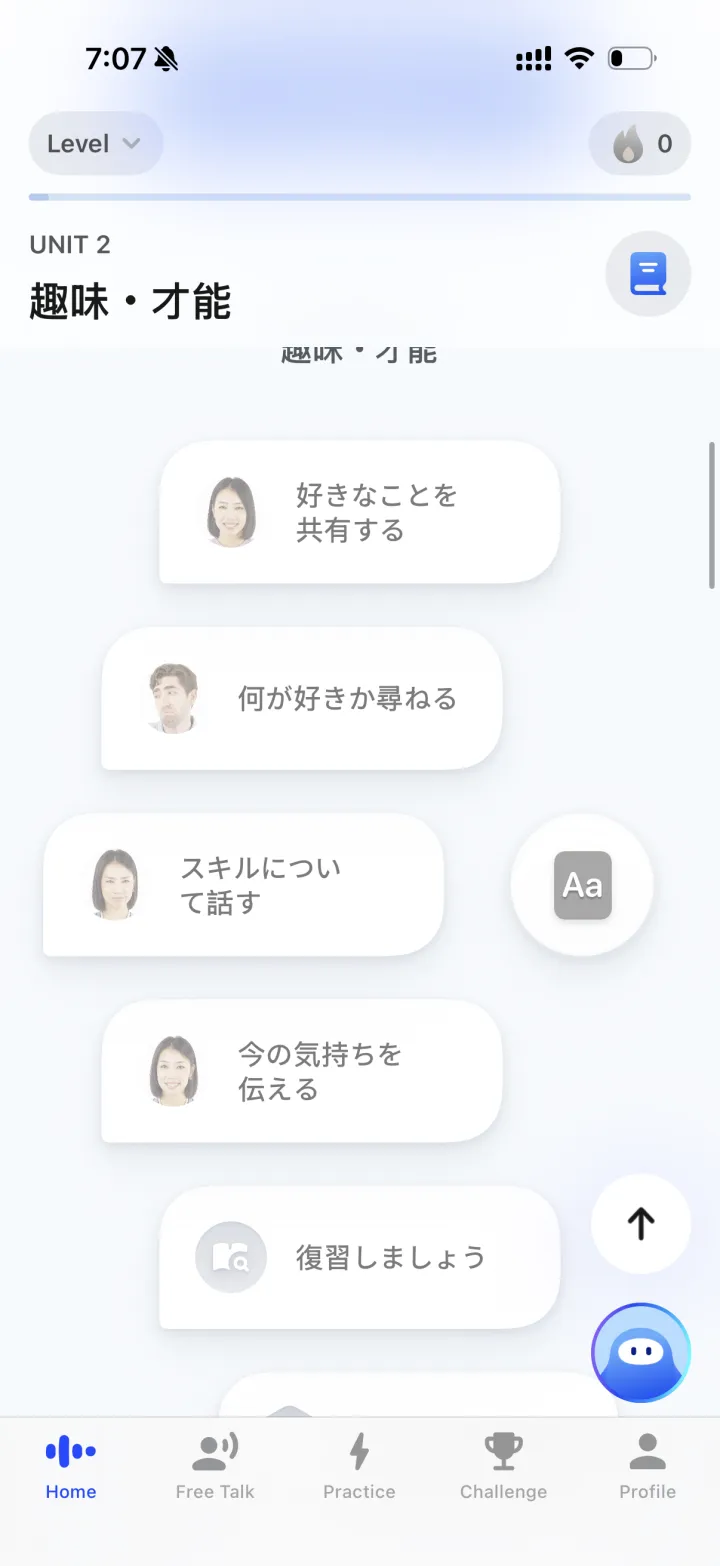
Speak is an AI speaking-first app built around one idea: get you talking, a lot, with pronunciation and fluency feedback. For learners whose main barrier is confidence rather than knowledge, it is one of the stronger specialist tools. The trade-offs are a premium price and a narrow, speaking-only scope rather than a full course.
Pros
- High volume of low-pressure speaking practice with useful pronunciation feedback.
- Polished, modern experience focused squarely on talking.
Cons
- Premium pricing; speaking-only scope rather than an all-round course.
- Some users report quality and billing issues (see the full review).
Pricing: premium subscription.
Our verdict: a strong specialist pick if building spoken fluency is your priority.
→ Read our full Speak review · What people say about Speak
6. TalkPal
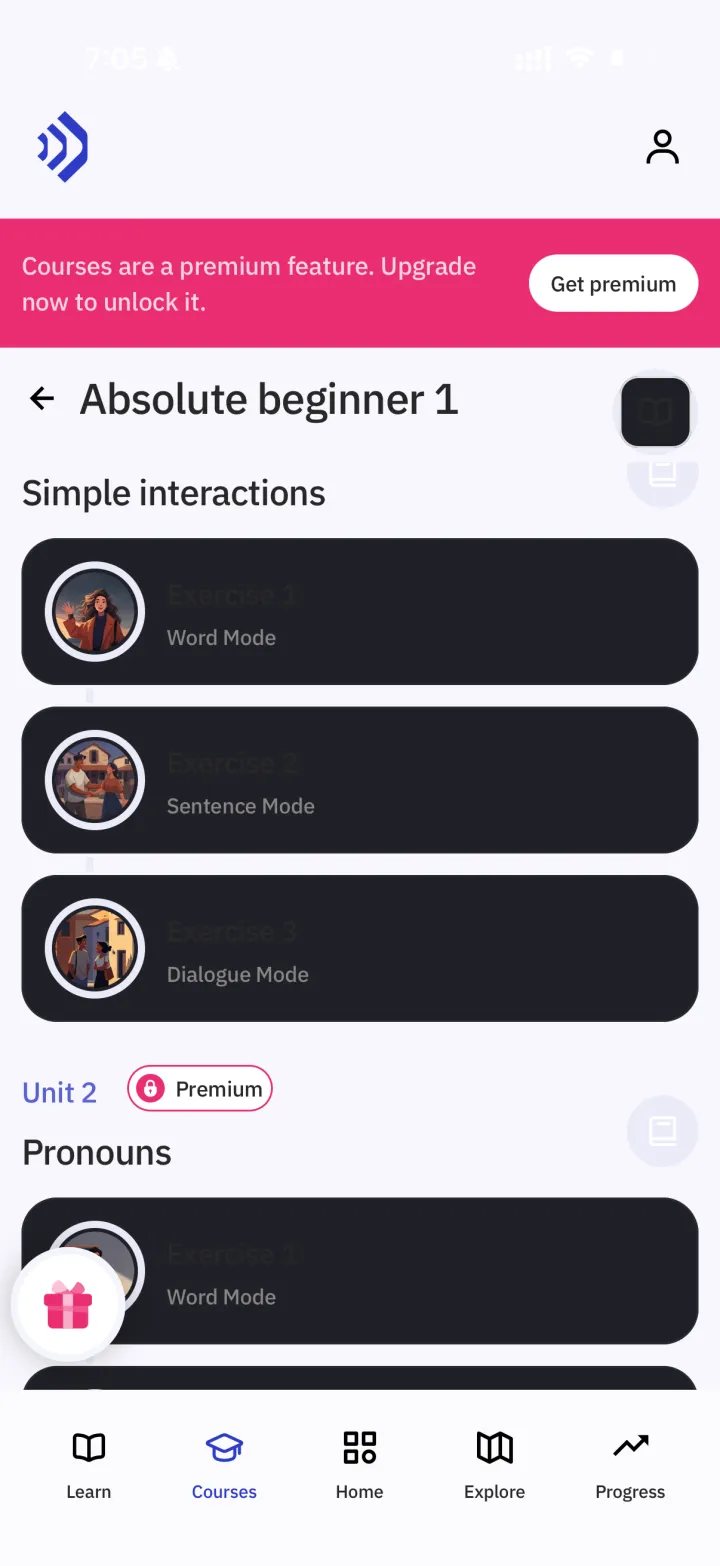
TalkPal is a flexible AI chat-and-voice tool with a range of modes — free conversation, roleplays and debates. It's versatile and pleasant to use; like most general AI chat tools, the trade-off is that the structure and the rigour of correction are up to you to drive.
Pros
- Versatile conversation modes (chat, roleplay, debate).
- Comfortable for free-form practice across many languages.
Cons
- Light structure; easy to practise without a clear plan.
- Correction depth varies by mode.
Pricing: free tier with paid upgrade.
Our verdict: good for self-directed learners who already know what they want to practise.
→ Read our full TalkPal review · What people say about TalkPal on Reddit
AI in language learning: common questions
From which app is best to whether you can really learn for free, these are the questions we hear most often about AI language learning apps — with our full answers below.
For the bigger picture on where AI helps and where a human still matters, see our guide on AI vs human tutors and free vs paid AI apps.
Our overall recommendation stands: pick the app that matches your goal, use it daily, and pair it with structured lessons and real correction. If you'd like that structure for free, our guided English track is built around exactly the speaking-and-feedback loop these apps only partly cover.
More AI app guides
Want a recommendation for a specific language or angle? We've ranked the best AI apps to learn English, Spanish, German, French, Italian and Russian — plus what Reddit recommends and how to learn a language for free.
Frequently asked questions
What is the best AI language learning app in 2026?
Our pick is Enverson AI: it was the strongest all-rounder in our hands-on testing and also came out on top in our reader survey, thanks to tailored speaking practice and corrections that explain your mistakes rather than just marking them wrong. The right app still depends on your goal, though — Babbel is best for structured, grammar-first learning, Duolingo is the best free starting point for beginners, and speaking specialists like Speak suit learners whose main barrier is confidence. Our full ranking and the reasons behind it are above.
Do AI language learning apps actually work?
Yes, for specific jobs. AI language apps are genuinely effective at building a daily habit, drilling vocabulary, and giving you far more speaking and writing practice — with instant feedback — than you would otherwise get. Where they are weaker is judgement: knowing which of your errors matter most, understanding your goals, and reproducing the unpredictability of real human conversation. The learners who progress fastest treat an app as their daily practice engine and pair it with structure and human-style correction.
Can you become fluent using only an app?
Rarely on its own. A good app can take you a long way: it builds the foundation — vocabulary, grammar and listening — and the sheer volume of practice that fluency requires. But fluency also needs a lot of real, unpredictable speaking and correction of your specific mistakes, which most apps only partly provide. You can get close to fluent largely through apps, especially speaking-first ones, but combining them with real conversation is what closes the final gap.
Which AI app is best for speaking practice?
If speaking is your priority, choose a speaking-first app. In our testing Enverson AI led for speaking that is also corrected and structured, while Speak is a strong specialist for sheer talking volume and pronunciation feedback. Avatar-based apps such as Praktika are good for low-pressure conversation practice. The key is to pick a tool built around producing speech with feedback, rather than one where speaking is a bolt-on between grammar drills.
Are AI language apps better than Duolingo?
It depends what you need. Duolingo is the best free app for building a daily habit and for absolute beginners, and it is hard to beat on gamification and the number of languages it covers. But for real, open-ended speaking practice and for corrections that explain why an answer is wrong, AI-first apps like Enverson AI and Speak go further. Many learners use Duolingo to stay consistent and add a speaking-focused app as they move past the beginner stage.
How much do AI language learning apps cost, and are they worth it?
Most sit between free and roughly $10–30 per month, often with a discount for annual plans. Free tiers and trials are genuinely useful for vocabulary and habit-building; paid plans usually unlock unlimited AI conversation, deeper correction and voice features. They are worth paying for when the app reliably replaces speaking or practice you are not otherwise getting — a month of daily AI practice typically costs less than a single hour with a private tutor. Always use the free trial fully before committing, and watch your renewal date.
Is there a completely free AI language learning app?
Yes. Some apps are usable for free indefinitely — Duolingo's core course is free with ads, and tools like Anki are free — and most others offer a free trial. Free tiers are excellent for vocabulary, drills and building a habit, but the features that need the most computing or human-style judgement, such as unlimited AI conversation and detailed correction, are often behind a paywall. You can still assemble a strong, fully free learning stack by combining tools; see our guide on free versus paid AI language apps.
What are the limitations of AI language tutors?
AI tutors are patient, available and cheap, but they have real limits. They can be confidently wrong, they sometimes miss subtle or context-dependent errors, they do not truly understand your goals the way a teacher does, and they can let you drift into fluent-but-wrong habits without prioritising the errors that matter most. They work best as high-volume practice paired with a structured plan and human-style correction.
What is the good thing about AI tutors?
The biggest benefit is volume without embarrassment: you can speak, make mistakes and repeat as many times as you like, any time, at very low cost. Good AI tutors give instant feedback, adapt difficulty to your level, and remove the social fear that stops many learners from speaking at all. That makes them excellent for building a daily habit and for rehearsing real conversations before you have them.
Can I use ChatGPT, Gemini or Claude to learn a language?
Yes — general assistants like ChatGPT, Gemini and Claude are genuinely useful for language learning: you can ask for example sentences, role-play conversations, get a draft corrected, or simplify a text to your level. The caveats are that they are not built as a structured course, they can occasionally give wrong or unnatural answers, and they will not track your progress. Treat them as a flexible tutor for practice, and pair them with a structured path so your learning has direction.