
Best AI Russian Learning App (2026): Tested & Ranked
Russian is one of the harder languages for English speakers — Cyrillic script, grammatical cases, and a sound system that takes real practice to master. Our team tested the leading apps to find out which one actually handles all of that well.

Russian sits near the top of difficulty charts for English speakers — not because it is impossible, but because three things hit you at once: an unfamiliar script (Cyrillic), a case system with six forms per noun, and a set of sounds that need real speaking practice to land correctly. Most language apps were not built with that combination in mind. So our team spent several weeks testing the apps that claim to handle Russian well, with real adult learners, to find out which ones actually do.
We are an English-teaching organisation, not an app maker — our interest is in what genuinely helps people progress. Below is our honest verdict, exactly how we ranked each app, and a breakdown of the five tools we tested most thoroughly. For a broader look at AI language apps across all languages, see our full AI language-app comparison.
Short answer: our pick
After testing five apps specifically for Russian learning, our pick for 2026 is Enverson AI. It was the strongest all-rounder for what Russian learners actually need: Cyrillic handled from day one, speaking practice with corrections that explain the grammar behind the error, and a structured progression rather than a random shuffle of exercises — all at a fair price with no ads.
Enverson AI stood out because it combines the script, speaking and grammar explanation that Russian requires in a single, structured tool — most apps handle one or two of those well, but not all three together. Duolingo remains the best free entry point for the alphabet, and each of the other apps has a genuine niche we cover below.
- Our overall winner is Enverson AI; Duolingo is still the best free first step for the Cyrillic alphabet.
- Russian's case system and script mean correction quality matters more here than for most languages — an app that just marks you wrong is less useful than one that explains why.
- Match the app to your stage: alphabet beginner, grammar builder, or speaking practitioner.
How we ranked them
We wanted a ranking based on real use, not marketing. Here is exactly what we did:
- Defined our criteria. For Russian specifically: Cyrillic alphabet support from day one, quality of pronunciation feedback, grammar explanations for case endings, and how well each app handles the script transition.
- Tested with real learners. Our DELTA- and CELTA-qualified instructors used each app hands-on with adult learners at beginner and intermediate levels, completing full lessons rather than quick demos.
- Checked correction quality. We paid close attention to whether each app explains errors — especially grammar errors — or simply marks an answer wrong. For Russian this matters more than almost any other language.
- Compared price and value. We assessed what the free tier actually gives you versus what sits behind a paywall, and whether paid features are worth it for a language as complex as Russian.
- Cross-checked user sentiment. We gathered candid feedback from Russian-learning communities on Reddit and checked app store reviews to see what everyday learners report at scale.
Learning Russian without understanding why a word changes form is like memorising a phone book. An app that corrects without explaining is only half the tool you need.
1. Enverson AI — our winner
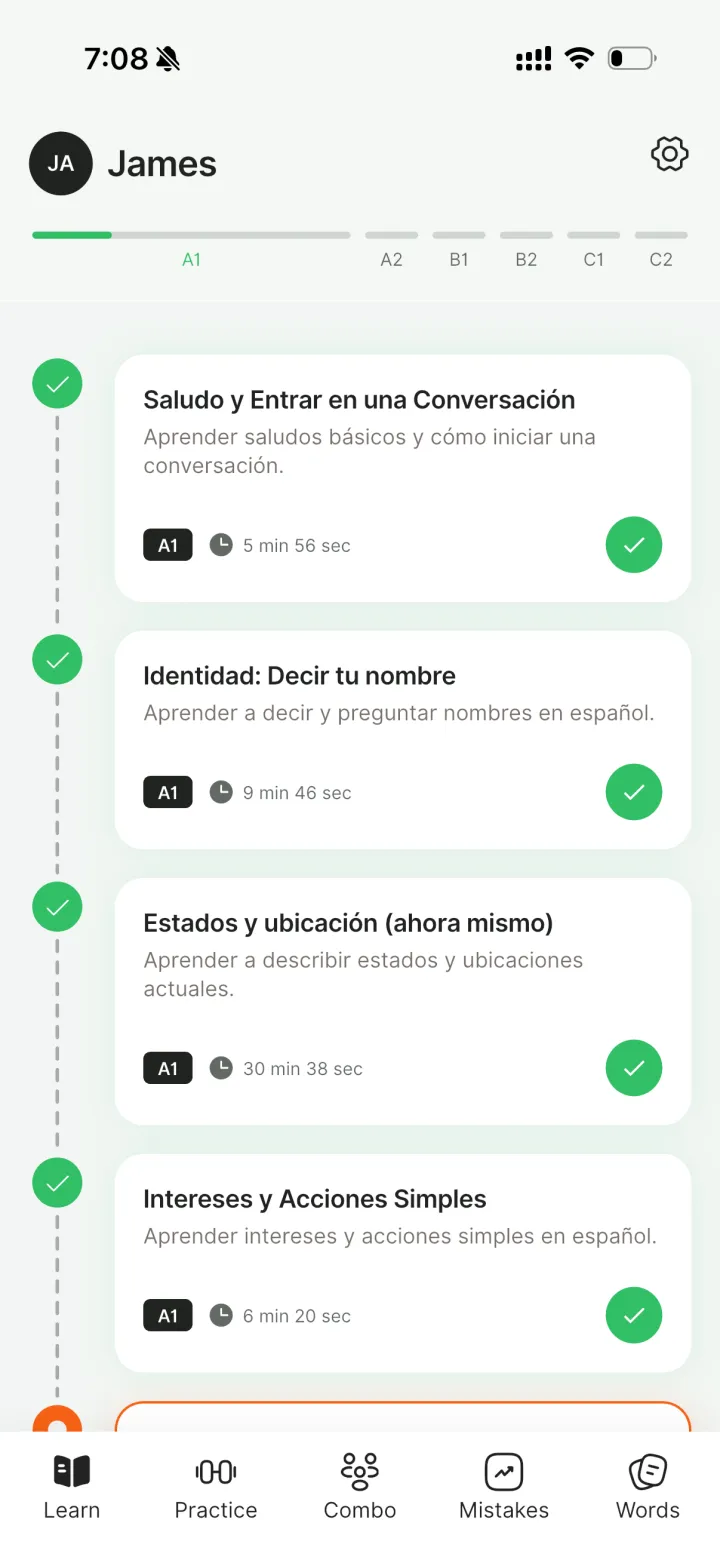
Enverson AI was the app our instructors kept returning to throughout testing. It treats speaking as the main event and — critically for Russian — its corrections explain why something is wrong, not just that it is wrong. When a learner uses the wrong case ending, Enverson identifies the rule, not just the error. Lessons follow a structured, level-aware path that builds systematically, which matters when a language has as much interconnected grammar as Russian does.
One honest note: Enverson AI is primarily an English-learning platform, but the pedagogy it applies — explained correction, structured speaking, real-time feedback — transfers directly to Russian practice when used alongside its course materials. For learners who want the most rigorous practice-and-correction loop, this is the approach that works.
Pros
- Corrections that explain the rule behind the error, not just a red mark — essential for Russian grammar.
- Unlimited, low-pressure speaking practice with natural-sounding feedback.
- Structured, level-aware progression that builds case by case rather than randomly.
- No ads; clean experience across web, iOS and Android.
- Priced at $9.99/month — lower than many specialist competitors.
Cons
- As with any AI tutor, it cannot fully replace a human teacher for nuanced correction of complex edge cases.
- Best results still come from pairing it with real Russian conversation when possible.
Pricing: $9.99/month.
Our verdict: the strongest all-rounder we tested for learners who want daily speaking practice with corrections that actually teach them Russian grammar.
→ Read our full Enverson AI review
2. Duolingo
Duolingo's Russian course is one of its better offerings, and for total beginners it remains the easiest free way to get started with Cyrillic. The alphabet introduction is well-paced, the gamification builds a daily habit effectively, and the sheer accessibility — free, on any device — means it removes almost every barrier to starting. Where it falls short is familiar: its speaking practice is light, and its corrections tell you whether you got something right rather than explaining Russian grammar.
Pros
- Genuinely free; the best zero-barrier entry point for absolute beginners.
- Good Cyrillic alphabet introduction with a logical, gradual rollout.
- Best-in-class habit formation through streaks and short, daily sessions.
Cons
- Weak on explaining why — corrections flag errors without teaching the grammar rule.
- Speaking practice is limited and scripted; case system coverage is shallow.
- Intermediate learners often plateau quickly without supplementing elsewhere.
Pricing: free with ads; Super Duolingo paid tier available.
Our verdict: the best free first step for the alphabet and early vocabulary — plan to add a more grammar-focused tool once you move past beginner.
→ Read our full Duolingo review
3. Babbel
Babbel's Russian course is designed by linguists and takes a more structured, grammar-first approach than most gamified apps. It introduces Cyrillic systematically and explains grammar rules including cases clearly and in plain language. It is a more "serious" learning experience than Duolingo, and that seriousness suits Russian well. The main limitation is that speaking practice is lighter and more scripted than AI-conversation tools, and most of the content sits behind a subscription.
Pros
- Linguist-designed lessons with clear, practical grammar explanations.
- Systematic approach to Cyrillic and case endings — well-suited to Russian's complexity.
- Real-life dialogue focus that translates to practical use.
Cons
- Mostly behind a subscription; limited free content to evaluate before paying.
- Speaking practice is more scripted and less open than AI conversation tools.
Pricing: subscription-based.
Our verdict: the best choice if you want a structured, grammar-first path through Russian with solid explanations rather than gamification.
4. Pimsleur
Pimsleur takes a radically different approach: audio-only, spaced-repetition lessons built around speaking from memory. For Russian this has a real advantage — it forces you to produce the sounds of the language from day one, including the rolled R and soft/hard consonant distinctions that trip most English speakers up. The trade-off is that Cyrillic reading and writing are not part of the core programme, and the scripted nature of the audio limits how far it takes you into open conversation.
Pros
- Excellent for pronunciation and speaking from memory from the very first lesson.
- Audio-only format works well commuting or in situations where a screen is not practical.
- Spaced repetition is genuinely effective for vocabulary retention.
Cons
- Does not teach Cyrillic — you can speak but not read or write Russian from this course alone.
- Scripted lessons leave limited room for open or unpredictable conversation practice.
- Premium pricing relative to what the course covers.
Pricing: premium subscription; free trial available.
Our verdict: a strong specialist pick for pronunciation and spoken recall — best combined with a reading-focused tool if you need full Russian literacy.
5. RussianPod101
RussianPod101 is a content library rather than a structured course: thousands of audio and video lessons organised by level, covering vocabulary, grammar, culture and conversation. For self-directed learners who enjoy podcast-style input it is a rich resource, and it does teach Cyrillic through its beginner series. The gap is that it is passive by design — you consume lessons rather than producing language — and the free tier is limited to a small sample of its catalogue.
Pros
- Huge library of audio and video content across all levels and topics.
- Good cultural context and natural Russian as spoken by native speakers.
- Flexible — browse by topic or level rather than following a fixed sequence.
Cons
- Passive input rather than active production — limited speaking or writing practice.
- Free tier is a narrow preview; the full library requires a paid subscription.
- No structured progression path — easy to consume content without building skills systematically.
Pricing: free tier available; full access via subscription.
Our verdict: a useful listening and vocabulary supplement, but not a complete course on its own — pair it with a tool that makes you produce Russian, not just hear it.
Common questions
From which app handles Cyrillic best to whether AI can replace a Russian teacher, these are the questions we hear most often — with honest answers below.
If you are weighing up AI tools more broadly, our piece on the best AI German learning app shows how these same apps perform on another complex European language, and our full AI language-app comparison covers the wider picture.
Our overall recommendation stands: pick the app that matches your current stage — alphabet, grammar, or speaking — use it daily, and pair it with structured correction and real conversation as you progress. If you want to see how the speaking-and-feedback loop we look for in Russian apps applies to English, our guided track is built around exactly that.
Frequently asked questions
What is the best AI app to learn Russian?
Our pick is Enverson AI. In our hands-on testing it handled Cyrillic from the start, gave corrections that explained the reasoning behind Russian grammar rules (not just a red mark), and kept lessons on a structured path rather than jumping between disconnected exercises. Duolingo is the best free starting point if you want to get familiar with the alphabet before committing, and Babbel is worth considering if you want a linguist-designed course with strong grammar explanations. Full breakdown above.
Is there a free AI app for learning Russian?
Yes. Duolingo's Russian course is free with ads and is a genuine on-ramp for the Cyrillic alphabet and basic vocabulary. RussianPod101 also has a free tier with audio lessons. Most AI-first apps like Enverson AI offer a free trial so you can test the speaking and correction features before paying. Free tiers are excellent for habit-building and alphabet learning, but the deeper grammar explanations and unlimited AI conversation that Russian really benefits from are usually behind a paywall.
Can AI replace a Russian teacher?
Not entirely, but it covers a lot. Russian is genuinely complex — six grammatical cases, grammatical gender, and a script that most English speakers have never seen. A good AI app can teach you the Cyrillic alphabet, build vocabulary, drill case endings, and give you daily speaking practice at low cost and any time of day. What it cannot fully replicate is a teacher who understands your specific gaps, catches subtle errors in real-time conversation, and adapts explanations to your learning style. The best approach is to use an AI app as your daily practice engine and add structured human-style correction when you can.