
Duolingo Review (2026): Our Hands-On Verdict
Duolingo is the world's most-downloaded language app and its free tier is genuinely usable — but is gamification enough to make you fluent? We tested it properly to find out.

Duolingo is the most downloaded language app on the planet, with hundreds of millions of learners and a green owl that has become one of the most recognisable mascots in tech. It is free, it runs everywhere, and for a lot of people it is the first real contact they have ever had with a foreign language. That popularity means it gets asked about constantly — and also means it gets unusually strong opinions, both for and against.
We tested Duolingo with real learners at beginner and intermediate level, using it the way most people actually use it: daily sessions, the free tier, the genuine curriculum. Here is what we found.
Short answer
Duolingo is the best free habit-builder and beginner on-ramp we have tested. Its free tier is genuinely usable — not a teaser — and the gamification (streaks, XP, leagues) is more effective at keeping people coming back than almost anything else on the market. The honest limits are that it trains recognition more than production, rarely explains why an answer is wrong, and can plateau learners once they move past the early stages. For absolute beginners who want to build a daily language habit for free, it is the obvious first choice; for intermediate learners who need to actually speak and be corrected, it needs a speaking-focused companion.
Duolingo's core strength is turning language practice into a daily habit that learners actually stick to — its gamification and huge language range make it the best free on-ramp in the business, covering over 40 languages with a polished, beginner-friendly experience.
- The free tier is genuinely full-featured — ads and hearts, but the entire lesson curriculum is accessible.
- Gamification (streaks, XP, leagues) is best-in-class for building a daily habit, especially at beginner level.
- Weak on open speaking and on explaining errors — intermediate learners should pair it with a production-focused tool.
What Duolingo is
Duolingo is a gamified language-learning platform available on the web, iOS and Android. It was founded in 2011 by Luis von Ahn (who also created CAPTCHA) and launched a model that made language education feel more like a casual game than a chore. Today it offers courses in over 40 languages, with English, Spanish, French and Mandarin among the most popular.
The curriculum is broken into short lessons of roughly five minutes each, grouped by unit and level. Exercises are mostly multiple-choice, matching, translation (typed or spoken), and short pronunciation checks. A streak counter tracks consecutive days of practice, and a leaderboard pits you against other learners in weekly leagues. Duolingo has also introduced AI-powered features in its Max tier — notably "Explain My Answer" (which tells you why a response was wrong) and "Roleplay" (open conversation with an AI character) — though these are locked behind the higher-price subscription.
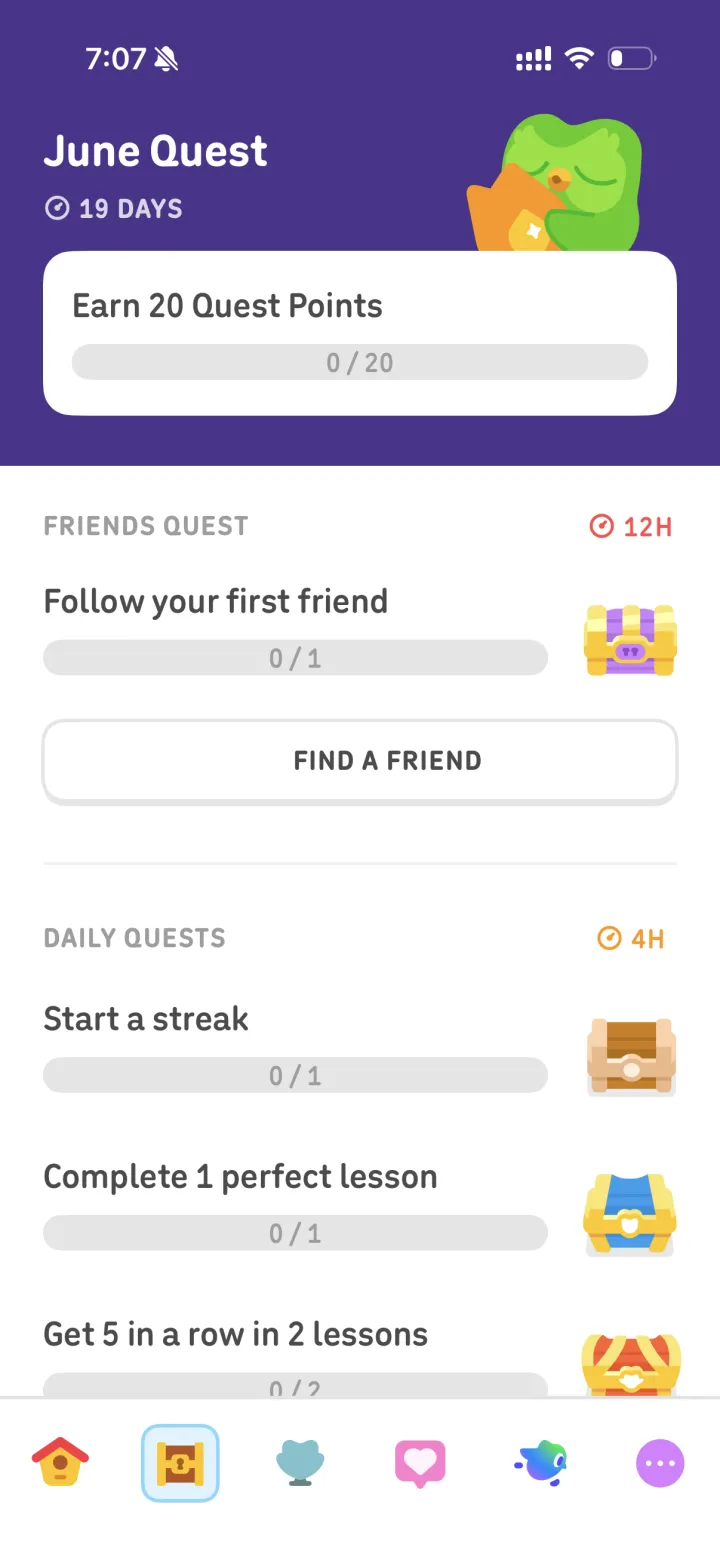
The company's stated mission is to make language education free and universally available, and the free tier lives up to that: the full lesson path is accessible without paying, which sets Duolingo apart from many competitors that gate their core content behind a paywall.
What it's like to use
In practice, Duolingo is polished, fast and genuinely fun to open. Lessons take five minutes or less, which makes them easy to slot into a commute or a coffee break. The UI is clean, the audio is clear, and the mix of exercise types keeps things varied enough that you don't feel like you're doing the same task on a loop.
Where we noticed limits early was in feedback. Duolingo tells you when an answer is wrong and shows the correct one, but outside the AI Max tier it rarely explains the underlying rule. A learner who types "I have went to the shop" is told the right answer is "I have gone to the shop" — but the why (the past participle rule for present perfect) is absent. For learners who want to understand the system rather than just learn correct forms by exposure, that gap matters.
Duolingo is the best at getting you to open the app every day. The question is whether what you do inside it matches what you actually need to learn.
Speaking exercises exist, but they are primarily pronunciation checks: Duolingo listens to you read a sentence aloud and decides whether it matched. There is no open conversation on the free tier, and even on paid tiers the speaking features are more structured than open. Learners at A2–B1 who want to practise real conversation — thinking on their feet, producing language they haven't just read — will hit this ceiling quickly.
On the positive side: the pacing for absolute beginners is excellent. The app introduces vocabulary gradually, reinforces it across exercise types, and spaces repetitions in a way that reflects good memory principles. For someone who has never encountered a language before, Duolingo gets them to a solid A2 foundation efficiently and without them feeling overwhelmed.
Pros and cons
Pros
- Excellent, genuinely free tier — the full lesson curriculum with no paywalled core content.
- Best-in-class habit formation through streaks, XP and weekly league competition.
- Huge range of languages (40+), with high production quality on the major ones.
- Very beginner-friendly: clear pacing, clean UI, short lessons that fit any schedule.
- Available everywhere — web, iOS, Android — so practice travels with you.
- Duolingo Max adds AI "Explain My Answer" and Roleplay features for learners who want more depth.
Cons
- Weak on open speaking — pronunciation checks exist, but free-form conversation practice does not on the standard free or Super tiers.
- Rarely explains why an answer is wrong on lower tiers; the underlying grammar rule is often missing.
- Can plateau intermediate learners who need to produce language, not just recognise the correct option.
- AI features (Explain My Answer, Roleplay) are locked behind the Max tier at a higher price point.
- Heart system on the free tier can interrupt a session at the wrong moment, which disrupts flow.
Pricing
Duolingo operates on three tiers:
- Free — full lesson curriculum, ads between lessons, limited hearts that reset daily.
- Super Duolingo — approximately $12.99/month; removes ads, gives unlimited hearts, adds offline mode and a few extras. An annual plan reduces the monthly cost significantly.
- Duolingo Max — higher price; adds AI "Explain My Answer" and "Roleplay" conversation features. Currently available for a limited number of courses.
For most learners, particularly at the beginner stage, the free tier is sufficient. Super Duolingo is worth considering if ads interrupt your flow or if you frequently run out of hearts. Duolingo Max makes more sense if you specifically want the AI explanation and roleplay features — though at that price point it is worth comparing it against dedicated speaking apps that offer deeper conversation practice.
What people say: real user reviews
Duolingo is one of the most polarising apps in language learning. Fans love the habit and the gamification; a vocal group of long-time users feels it has declined and become repetitive — that it "teaches the same things again and again and feels generic." Here is a fair spread of real feedback.
On Reddit
Two widely-shared critical posts capture the mood (summarised):
In r/duolingo, "Duolingo became so bad, I wish there was an open alternative" argues the app has declined dramatically — adding restrictive monetisation (hearts and energy), removing useful features (grammar explanations, the forums, flexible learning paths), focusing on unnecessary additions, and drifting away from its original mission of accessible language learning. The writer wishes an open, community-driven alternative existed.
In r/languagelearning, "Why I wouldn't recommend Duolingo" argues it prioritises engagement and revenue over effective learning, criticises the heavy gamification and growing use of AI, and contends that real-world content — YouTube, Reddit, Wikipedia, messaging — is far more effective for becoming fluent.
Positive voices are just as real:
"Duolingo is a really fun and easy way to start learning a language. The lessons are short, engaging, and perfect for daily practice. The gamified system keeps me motivated, and I like how it builds a consistent learning habit without feeling overwhelming. Great for beginners who want to stay consistent."
"I've had a good experience using Duolingo to refresh my Spanish. It's convenient, mobile-friendly, and makes learning feel like a game rather than studying. While it may not be enough on its own for fluency, it's a solid tool for vocabulary building and daily exposure to a new language."
On Trustpilot
Critical:
★☆☆☆☆ "0 stars if that was an option" — "I opted to receive a notification when my renewal date was approaching. I never received it. Charged £68 for an annual subscription when I hadn't used the app in 3 weeks. Tried to apply for a refund the same day. Rejected twice. Terrible company. Stay away."
★☆☆☆☆ "Quit wasting my time!" — "I've used Duolingo for several years and learned a lot, but they have clearly abandoned their goal of helping people learn and are focused more on making money. My most recent pet peeve is that they place posts on my feed from random strangers — it wastes so much time weeding through them to see posts from actual friends, and there's no way to stop it. It seems they have no respect for their users."
Positive:
★★★★★ "The only way of learning French that worked for me" — "Duolingo is the only way of learning French I have ever managed to make work for me! The lessons are only bite-sized, so for someone like me who is often short of time, it is perfect."
★★★★★ "Duolingo is the best!" — "They give you rewards and encouragement after each question, and they're considerate by giving options to skip certain exercises."
The split matches our own verdict: Duolingo is genuinely excellent at what it is built for — a low-pressure, habit-forming on-ramp for beginners — and people who use it that way stay loyal for years. The criticism is also fair: heavier monetisation, the loss of grammar explanations and forums, repetitiveness, and a sense that engagement now comes before learning. Treat it as a habit-builder and vocabulary tool, not a path to fluency on its own, and (as the billing complaints show) keep an eye on your renewal date.
Reviews sourced from Trustpilot and Reddit (r/duolingo, r/languagelearning); Reddit critical posts are summarised, other quotes lightly tidied for typos.
Our verdict
Duolingo earns its reputation as the best free habit-builder and beginner on-ramp in language learning. The free tier is one of the most genuinely complete in the industry, the gamification is executed better than any competitor we tested, and the range of languages available is unmatched. For an absolute beginner who wants to find out whether they enjoy a language, or for anyone who struggles to make practice a daily habit, Duolingo is the obvious first recommendation.
The honest limits are real, though. The app trains recognition — choosing the right answer from a set of options — far more than production — finding and speaking or writing the right words yourself. It rarely tells you why something is wrong, so learners can build correct habits without understanding the rules behind them. And once you move past the early stages, the speaking exercises become a ceiling rather than a ladder.
Our recommendation: use Duolingo freely as your habit anchor, especially early on. As soon as you are past A2 and want to actually speak, add a tool built around open conversation and real correction. For the full picture of what that looks like, see our full comparison of AI language learning apps.
Common questions
Here are the questions we hear most about Duolingo — our detailed answers are directly below.
Frequently asked questions
Is Duolingo worth it?
For beginners and for building a daily habit, yes — Duolingo is genuinely worth using, especially on the free tier. Its gamification is the best in class and it covers an impressive range of languages. The honest limit is that it becomes less sufficient as you move past the beginner stage: it trains recognition (choosing the right answer) better than production (speaking or writing freely), and it rarely explains why an answer is wrong. For serious progress past B1, pair it with a speaking-focused tool or structured lessons.
Is Duolingo free?
Yes — Duolingo's free tier is genuinely usable and not a stripped demo. You get full access to the lesson curriculum with ads between lessons and a limited number of 'hearts' (lives) that reset daily. The paid Super Duolingo (around $12.99/month — verify the current price) removes ads, gives unlimited hearts, and unlocks a few extra features such as the Duolingo Podcast and offline mode. Duolingo Max adds AI conversation and explanation features at a higher price point. Most learners find the free tier sufficient at the beginner stage.
Is Duolingo good for speaking?
Duolingo includes speaking exercises — you read a sentence aloud and it checks your pronunciation — but these are limited compared to dedicated speaking apps. The exercises are usually short and scripted rather than open conversation, and feedback beyond pass/fail is minimal. If building speaking confidence and getting corrected on real mistakes is your priority, we'd recommend pairing Duolingo with a tool built around open conversation practice. Duolingo is best understood as a habit-former and vocabulary builder, not a speaking trainer.