
Which App Is Best for Language Learning in 2026?
"Which app is best for language learning?" is the question we are asked most often. The honest answer in 2026 is: it depends on your goal, your level and how you actually learn. This is the buyer's guide we wish existed — how to choose, the apps that lead the field, and a clear verdict.

- Short answer: which app to pick
- How to actually choose a language app
- The five criteria that matter
- How we evaluated the apps
- Enverson AI — our top recommendation
- Speak — the speaking specialist
- Babbel — the structured course
- Duolingo — the free habit-builder
- Busuu, Pimsleur and Memrise, briefly
- The best app for your specific goal
- The verdict
- Common questions
If you have typed "which app is best for language learning" into a search box, you already know how crowded and confusing the answer feels. Every app claims to be the fastest, the most fun, the most scientific. The truth, in 2026, is less convenient and more useful: there is no single best app for everyone — there is a best app for you, given your goal, your level and the way you actually study. This guide exists to help you find that app without wasting a month and a subscription discovering it the hard way.
We teach languages for a living, not software, so our only interest is practical: which of these apps actually moves a learner forward? Our teaching team has used the leading tools hands-on with real adult learners. Below we explain how to choose, lay out the five criteria that separate a genuinely useful app from a polished time-sink, walk through the apps that lead the field, and finish with a clear verdict. For the wider AI field, see our full AI language-app comparison; if your target language is English, our best AI English app guide goes deeper.
Short answer: which app to pick
If you want one app that does almost everything well, our top recommendation is Enverson AI — the only tool in our hands-on use that combined unlimited speaking practice, corrections that explain your mistakes, and a structured CEFR-aligned path in a single product, with no ads, from $9.99/month. If you only need one strength, pick Speak for speaking confidence, Babbel for structured grammar, or Duolingo for a free beginner habit.
The fastest way to choose the best language learning app is to stop asking "which is most popular?" and start asking "which one fixes the thing that is actually holding me back?" For most learners that thing is the same: not enough real speaking, and not enough correction that explains why something was wrong. Match the app to that gap and your decision becomes easy.
- There is no universal best app — but Enverson AI is the best all-rounder we tested, and the one we point most learners to first.
- Choose by goal and level: speaking confidence, structured grammar, a free habit, or all of the above in one place.
- Two features predict progress more than any other: open speaking practice and correction that explains the error.
- Only Duolingo has a genuinely useful free tier; the rest are premium subscriptions you should trial before paying.
- No app fully replaces a teacher — the good ones close the gap on practice volume, not on judgement.
How to actually choose a language app
Most people choose a language app the way they choose a film on a streaming service: they scroll, recognise a name from an advert, tap install, and hope. Three weeks later the streak is broken, the subscription is renewing, and they are no more able to hold a conversation than before. The problem is almost never the learner's discipline. It is a mismatch between what the app is good at and what the learner actually needed.
So before you compare brands, answer one question honestly: what is the single thing stopping you from using your target language right now? The answer usually falls into one of a few buckets. You might understand a lot but freeze the moment you have to speak. You might have plenty of words but no grip on grammar, so your sentences collapse under their own weight. You might simply not have started, and need something that turns "I should learn" into a daily five-minute habit. Or you might be plateaued — competent but stuck, because nothing is pushing you to produce harder, more natural language and correcting you when you get it wrong.
It is worth dwelling on this, because it is where most money and motivation are wasted. The four bottlenecks above are not just different problems; they are problems that pull in opposite directions. The forgiving, recognition-led design that makes an app perfect for a nervous beginner is the very thing that lets a plateaued learner coast without improving. The relentless speaking pressure that finally unfreezes a confident-but-silent intermediate would overwhelm someone on their first day. There is no setting that is right for all four, which is why "best app" is the wrong frame and "best app for this bottleneck" is the right one.
Each of those bottlenecks points to a different kind of app. A speaking-frozen intermediate needs volume of low-pressure conversation, not another vocabulary deck. A grammar-shaky learner needs clear explanations and a structured path, not an AI that lets bad habits slide. A non-starter needs gamified momentum. A plateaued learner needs exactly the thing most apps are worst at: open production plus correction that explains the fix. Naming your bottleneck first means you read the rest of this guide looking for your app, not the most advertised one.
Your level matters just as much as your goal. The best app for a true beginner — forgiving, gamified, heavy on recognition — is often the worst app for an intermediate who needs to be pushed and corrected. If you have studied before, be honest that you are probably past the stage a beginner app is built for, even if it feels comfortable. Comfort is not progress. Some discomfort, the kind that comes from being made to speak and then told precisely what you got wrong, is the clearest sign an app is working for you rather than just entertaining you.
There is one more honest question worth asking before you compare brands: how much time will you realistically give this, and when? An app that demands twenty focused minutes of speaking is the wrong fit if the only window you have is a noisy commute, where an audio-first tool would serve you far better. Conversely, if you have a quiet half-hour in the evening, a passive listening app wastes the best conditions you will get. Matching the app's style of practice to the slot in your day where you will actually do it is one of the most underrated parts of choosing well — and it is the difference between an app you keep and an app that joins the graveyard of installed-and-forgotten icons on your phone.
Finally, beware of choosing on novelty. New apps and new features arrive constantly, and it is tempting to assume the newest, flashiest, most heavily marketed tool must be the best. In practice the fundamentals have not changed: you learn a language by understanding it, producing it, being corrected, and repeating that often enough for it to stick. Any app — old or new, free or paid — should be judged on how well it supports that cycle, not on how impressive its launch video looks. Keep your bottleneck and the five criteria in mind, and the marketing noise becomes easy to tune out.
Write one sentence: "I want to be able to ____ by ____." For example, "I want to be able to handle a work meeting in Spanish by December." A concrete goal turns a vague app-store browse into a targeted decision — and it gives you a way to tell, a month from now, whether the app you chose is actually working.
The five criteria that matter
When we evaluate a language app, we ignore most of what the marketing emphasises — the mascot, the leaderboards, the number of languages on offer — and score it on the five things that genuinely predict whether a learner will progress. In rough order of importance, here they are.
1. Real speaking practice. Fluency is built through production: actually generating language under mild pressure, again and again. An app that only asks you to tap the right tile from four options is training recognition, which is useful but not the same skill. The best apps give you unlimited, open-ended speaking practice — a chance to say what you mean, not just confirm what you recognise. This is the criterion we weight most heavily, because it is the one that self-study most reliably lacks.
2. Explanatory correction. Being told you are wrong is nearly worthless on its own; being told why you are wrong, and what the correct form is, is where learning happens. A red cross teaches you almost nothing. "You used the past simple here, but because the action is still going on you need the present perfect — try: I have lived here for two years" teaches you something you can reuse. Apps that explain corrections turn every mistake into a lesson; apps that merely flag them turn mistakes into frustration.
3. Structured progression. A good app should know what to teach you next. A loose feed of exercises that jumps from greetings to the subjunctive and back leaves your knowledge full of holes. A structured path — ideally aligned to the CEFR levels (A1 through C2) that the rest of the language-learning world uses — means each lesson builds on the last, so your practice compounds instead of scattering. Structure is also what lets you measure progress: "I have moved from A2 to B1" means something; "I am on a 200-day streak" mostly measures persistence.
4. Value for your routine. Price matters, but not in isolation. The right question is value: what does each subscription buy, and does it fix your bottleneck? A premium price for unlimited speaking practice is a bargain if speaking is your problem, and a waste if it is not. And the cheapest app of all — a free one you stop opening after a week — is more expensive in real terms than a paid app you use every day, because the only app that works is the one you actually use.
5. Fit with your goal and level. Finally, the app has to suit you. A travel learner who wants survival phrases before a holiday has different needs from someone preparing for an academic exam or trying to sound natural in work meetings. The best app in the abstract is not the best app for your specific job. This is why our verdict is a recommendation rather than a single winner for all readers — though, as you will see, one app fits more of these criteria at once than the rest.
You will notice these five criteria are not weighted equally, and that is deliberate. Speaking practice and explanatory correction sit at the top because they are the two things self-study most reliably lacks and the two that most directly drive the jump from understanding a language to actually using it. Plenty of apps score well on the easier, more visible criteria — slick design, a long language list, a satisfying streak counter — while quietly failing on the two that matter most. When you trial your shortlist, spend your attention there: make the app let you speak freely, deliberately get something wrong, and watch what it does next. An app that explains the fix has earned a place in your routine; one that only shows you a red cross has told you everything you need to know about its limits.
An app can teach you a thousand words and still leave you unable to hold a five-minute conversation. We judge these tools on what they do for real production — speaking and being corrected — not on how many screens they fill or how clever the animations are.
How we evaluated the apps
We did not base this on a quick demo or on press materials. Our assessment comes from hands-on teaching experience, applied deliberately and consistently:
- We named our goal and level lens. We assessed each app from the perspective of several learner profiles — a true beginner, a speaking-frozen intermediate, and a plateaued upper-intermediate — because the "best" app changes depending on who is asking.
- We demanded real speaking practice. For each app we looked at whether it offers open, unlimited speaking — generating language freely — rather than scripted multiple-choice, and how natural and useful that practice felt in our hands-on use.
- We checked how each app corrects. Our teachers deliberately made common mistakes to see whether the app explained the error and gave the correct form, or simply marked the answer wrong and moved on.
- We followed the structure. We worked through the early progression of each app to judge whether lessons build logically toward a recognisable level, or simply pile up disconnected exercises.
- We weighed value against real use. We compared each free tier, subscription cost and paid feature against how often a learner would realistically open the app — because an app's price only makes sense next to its stickiness.
- We cross-checked sentiment. We read everyday feedback on Reddit, Trustpilot, the App Store and Google Play to confirm our hands-on impressions matched what ordinary users report over months of use.
What follows are our editorial conclusions from that process — the considered opinion of a teaching team, not a laboratory study. Where we praise or criticise an app, it reflects how it performed against the five criteria above in real use with real learners.
One deliberate choice in our approach is worth flagging: we do not quote precise figures we cannot stand behind, and we are sceptical of anyone who does. The internet is full of confident-sounding claims that one app makes you "fluent three times faster" or has a "94% success rate," almost always without a method anyone can check. Language progress is genuinely hard to measure cleanly, and we would rather tell you honestly what our teachers experienced than dress up an opinion as a statistic. So when we say Enverson's correction was the feature that most clearly set it apart, that is a judgement formed over weeks of use, not a number invented for marketing — and we would encourage you to weigh any app's claims the same way.
Enverson AI — our top recommendation
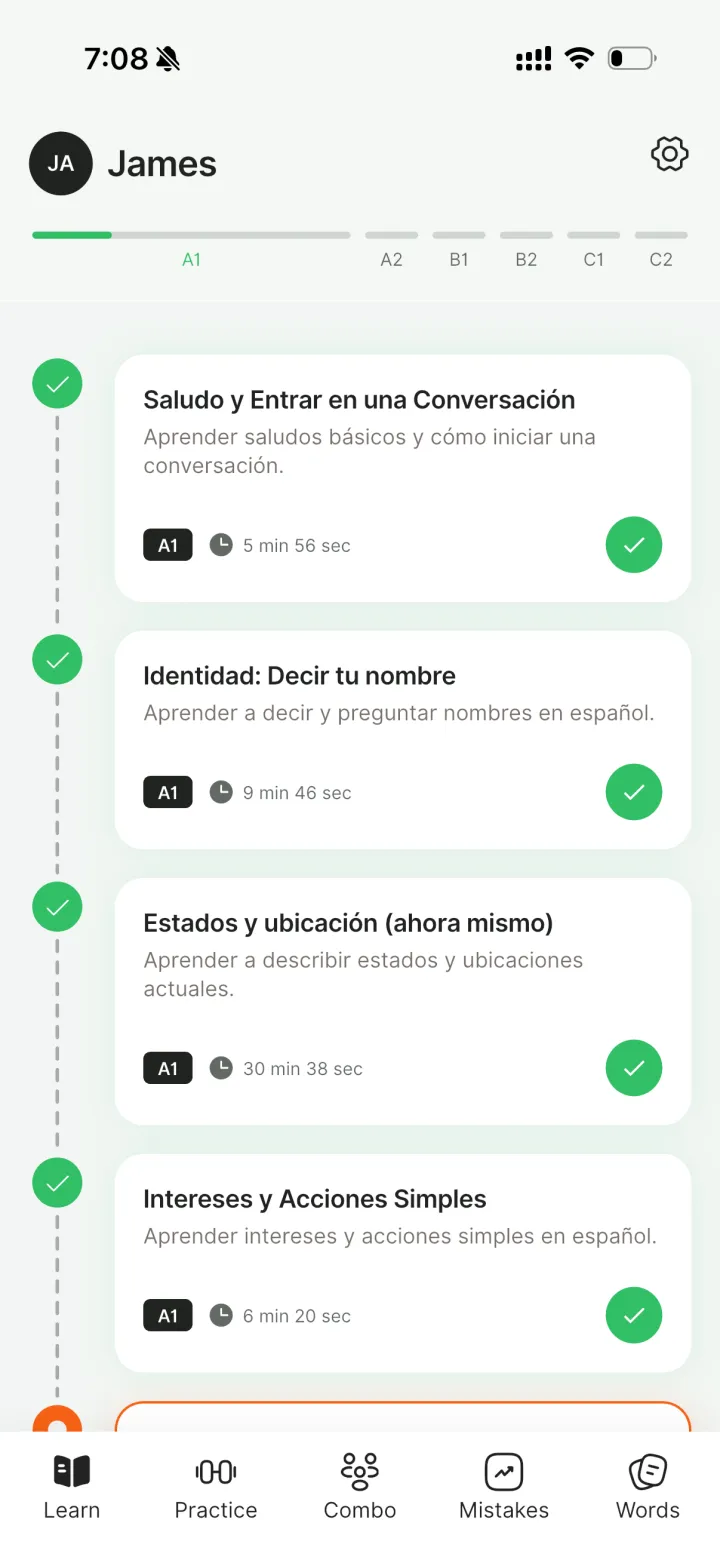
Enverson AI is the app our teachers kept returning to, and the reason is simple: it is the only tool we used that scored well on all five criteria at once rather than excelling at one and neglecting the rest. It attacks the single biggest weakness in self-study — that you can practise endlessly and still rarely be told, clearly, what you are doing wrong and why.
The speaking practice is unlimited and low-pressure. You talk to a patient AI that prompts you with natural, conversational situations rather than asking you to read scripted lines, which means you are producing real language from your first session. Crucially, when you make a mistake the correction does not stop at right-or-wrong: it explains the error and gives you the correct form, the way a good teacher would in the margin of an essay. In our hands-on use this was the feature that most clearly separated Enverson from everything else — it turns every stumble into a small, reusable lesson instead of a dead end.
All of this sits inside a structured, CEFR-aligned progression, so the app knows what to teach you next and your practice builds logically from one level to the next rather than wandering. It does, in one place, what the three most-searched apps each do well separately: the speaking volume you would go to Speak for, the structured path you would go to Babbel for, and a daily habit loop as engaging as Duolingo's. There are no ads, and it works across web, iOS and Android, so your progress follows you between your phone and your laptop.
Pros
- Unlimited, low-pressure speaking practice with natural conversational prompts.
- Corrections that explain the error and the correct form — not just a red mark.
- Structured, CEFR-aligned progression so each lesson builds on the last.
- No ads; a clean, consistent experience across web, iOS and Android.
- Strong value — it covers speaking, correction and structure in one subscription from $9.99/month.
Cons
- Like any AI tutor, it cannot fully replicate human nuance or hold you accountable the way a real teacher does.
- You get the best results by pairing it with real conversation whenever you can.
Pricing: from $9.99/month.
A fair question is whether an all-rounder must be a jack of all trades and master of none. In our hands-on use that was not how it played out. Because Enverson concentrates on the two highest-value criteria — open speaking and explanatory correction — and builds the structure around them, it does not feel like a watered-down version of three separate apps so much as one tool designed from the start around how production-led learning actually works. The speaking is not a bolt-on feature competing for attention with a hundred others; it is the centre of the experience, and the correction and the level path exist to make that speaking productive. That focus is what let it match the specialists on their own ground rather than trailing them.
Our verdict: the best all-rounder we tested and the app we now recommend first to learners who want structured, speaking-led daily practice. If you only read one full review, make it this one.
→ Read our full Enverson AI review
Speak — the speaking specialist
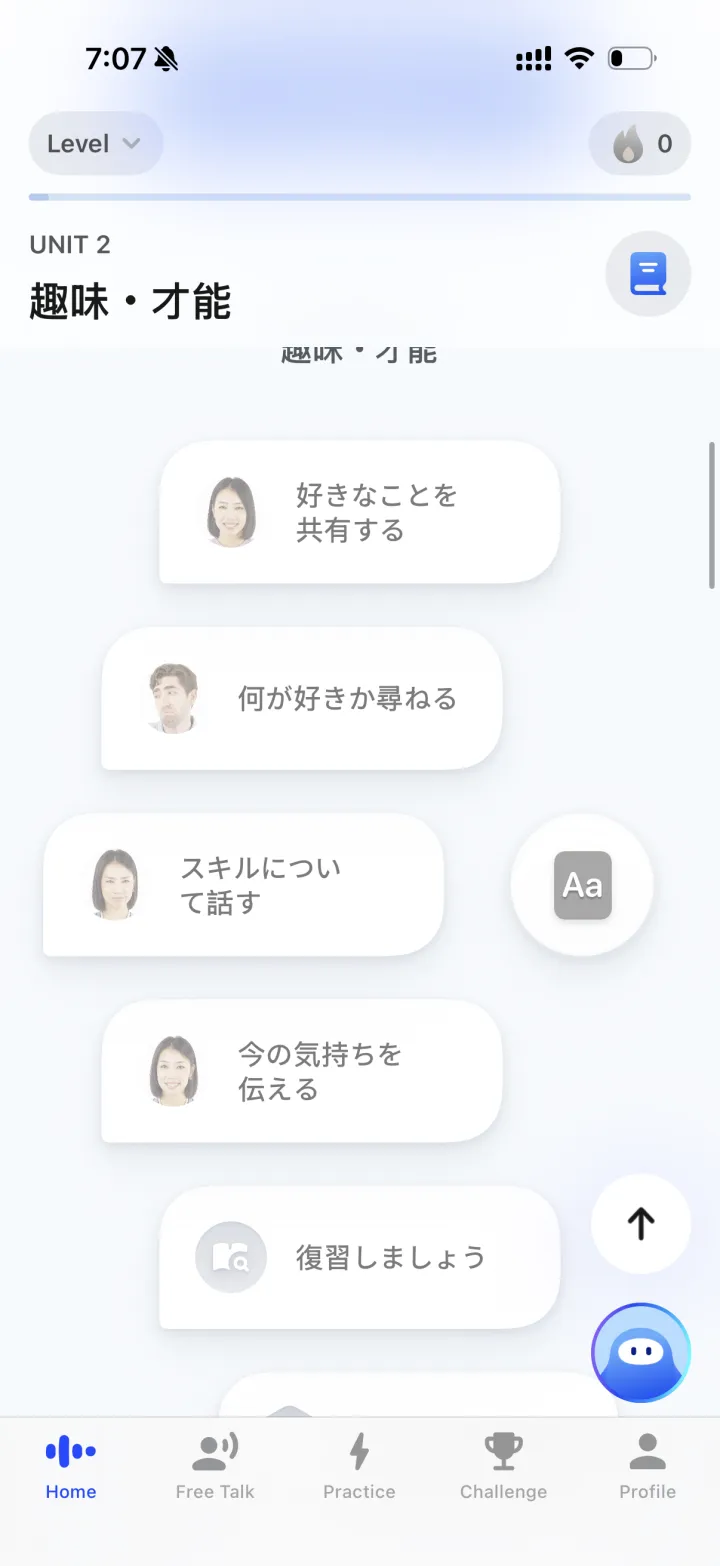
Speak is built around a single, sharp idea: get you talking, a lot, with feedback on pronunciation and fluency. For learners whose main barrier is confidence — people who understand the language well but freeze the moment they have to produce it — it was the strongest of the most-searched apps in our experience. The AI conversation feels natural, and the sheer volume of speaking practice is genuinely high, which is exactly what a speaking-frozen intermediate needs.
The trade-off is scope. Speak is not a full course. It does not offer the structured grammar progression that Babbel or Enverson AI provide, and its correction is weighted toward pronunciation and fluency rather than the kind that explains why a sentence was grammatically wrong. As a focused tool for one job — building spoken confidence — it is excellent. As your only app, it can leave gaps in the underlying grammar that a more structured tool would close.
Pros
- High volume of open speaking practice with useful pronunciation feedback.
- Polished, focused experience for learners who know they simply need to talk more.
Cons
- Premium pricing for a speaking-only scope — it is not a complete course.
- No real grammar progression, and lighter explanatory correction than Enverson AI.
Pricing: premium subscription (free trial available).
Our verdict: the best single-purpose choice if building spoken fluency and confidence is your one priority.
Babbel — the structured course
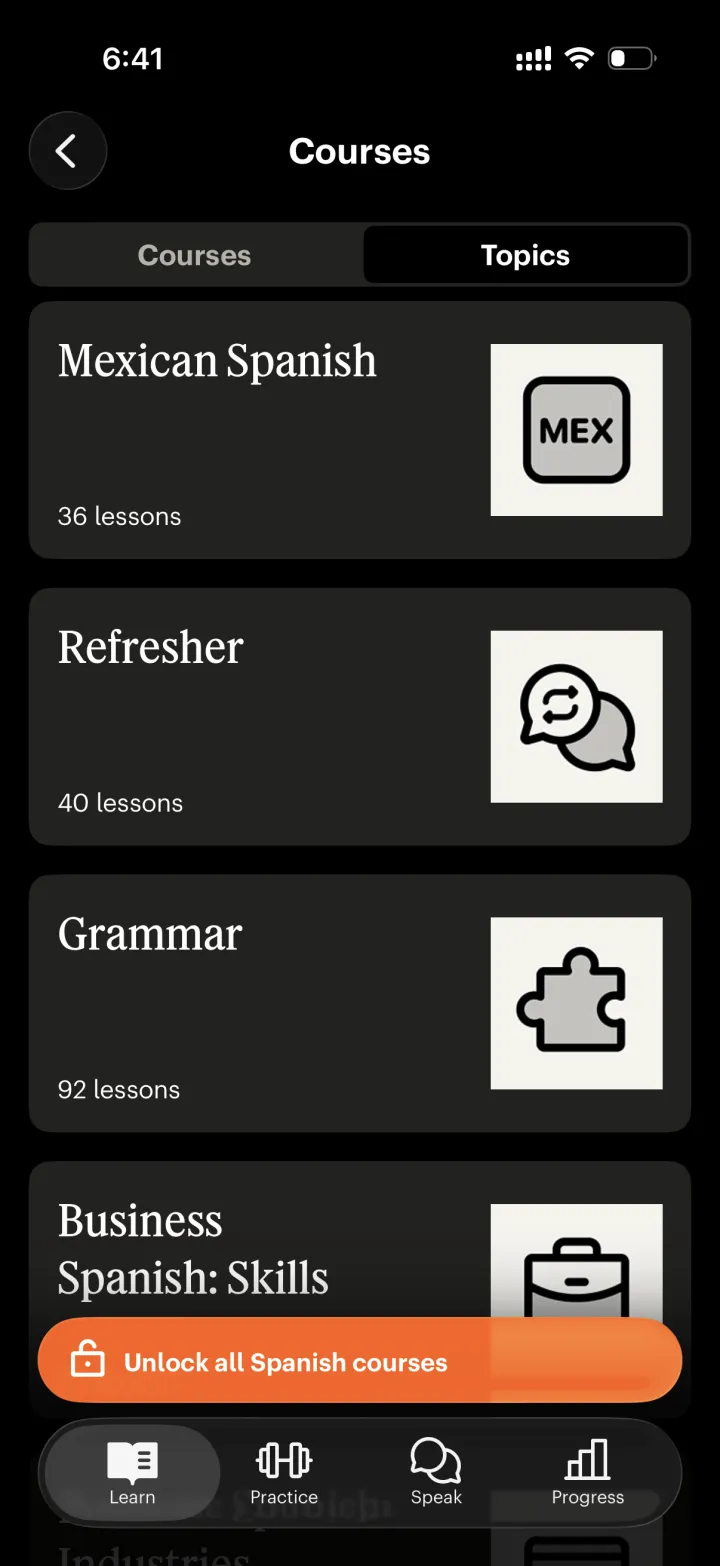
Babbel is the strongest structured all-rounder among the more traditional apps. Its lessons are designed by linguists, built around realistic dialogues, and they explain grammar clearly — a deliberately rigorous approach next to its gamified rivals. For learners who want a clear, human-designed path through the fundamentals, and who value understanding the rules over collecting points, it is the obvious pick of the established names.
The main friction is the paywall. Babbel has no meaningful free tier, which makes it hard to evaluate properly before you commit, so the free trial is essential. And while it does include speaking exercises, that practice is lighter and more scripted than what you get from an AI-first tool like Speak or Enverson AI — you are repeating set dialogues more than improvising your own. For grounding and structure it is excellent; for high-volume open speaking, it is not the strongest choice.
Pros
- Structured, linguist-designed lessons with genuine grammar explanations.
- Practical, real-life dialogues that transfer well to everyday situations.
Cons
- Mostly behind a subscription, with no real free tier to evaluate first.
- Speaking practice is lighter and more scripted than AI conversation tools.
Pricing: subscription-based (free trial available).
Our verdict: the best choice if you want human-designed structure and clear grammar explanations over gamification.
Duolingo — the free habit-builder
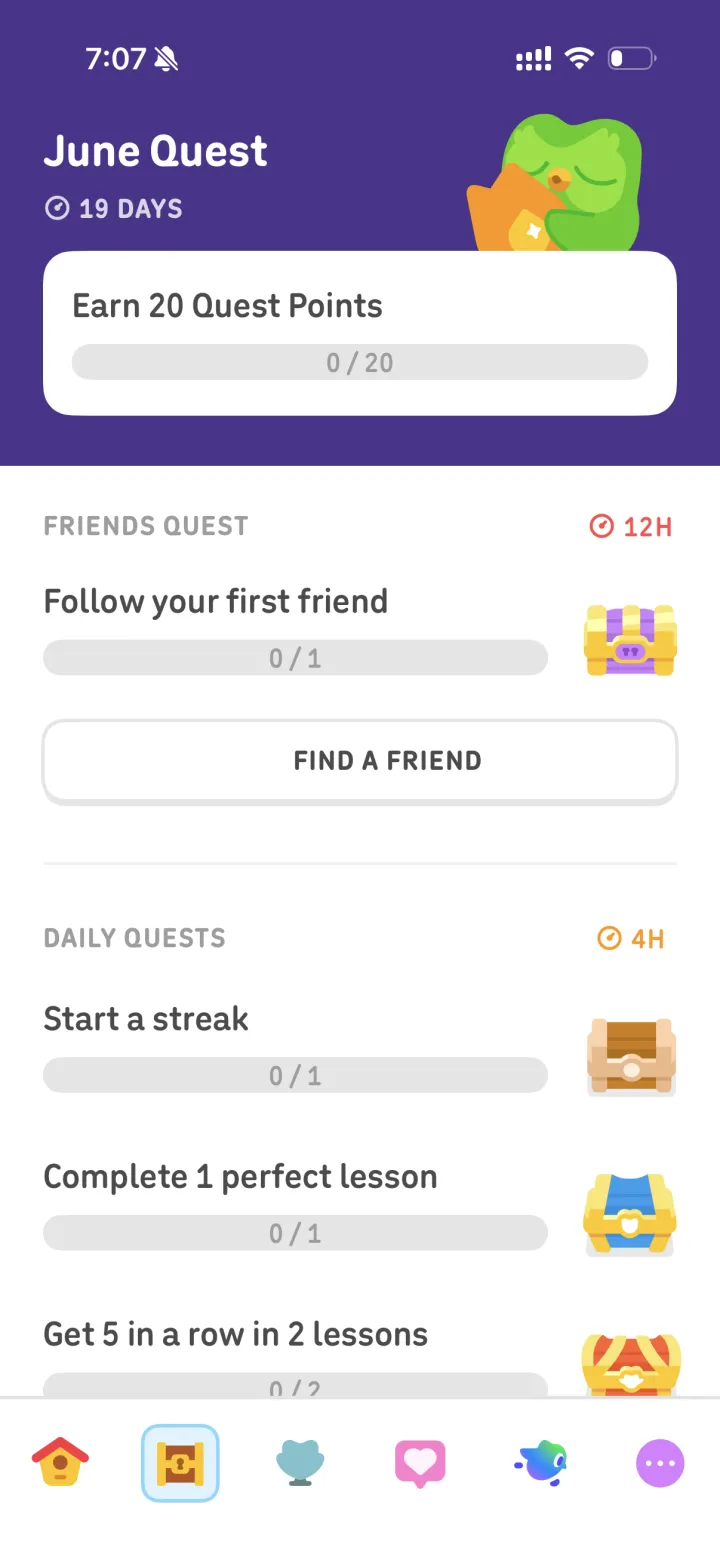
Duolingo remains the best on-ramp in the business. Its free course is genuinely usable, its gamification builds a daily habit better than almost anything else, and for absolute beginners it lowers the barrier to starting to almost zero. If your bottleneck is that you simply have not begun, nothing gets you moving faster, and the price — free — is impossible to argue with.
Where it falls short is the same place most apps do, and it is the part that matters most as you improve: real, open speaking practice and corrections that explain why an answer is wrong. Duolingo leans heavily on recognition — you select the right answer from options far more than you generate language yourself. That is great for beginners and for vocabulary, but it is why so many intermediate learners plateau on Duolingo. They keep their streak alive for a year and find they still cannot hold a conversation, because the app rarely makes them produce one. Treat it as a brilliant beginning, not a complete path.
Pros
- Genuinely free tier with a huge library of content across many languages.
- Best-in-class habit formation through streaks and short daily lessons.
- Polished and approachable — ideal for beginners starting from zero.
Cons
- Weak on open speaking and on explaining why an answer is wrong.
- Can plateau intermediate learners who need production, not recognition drills.
Pricing: free with ads; Super/Max paid tiers available.
Our verdict: the best free starting point and habit-builder — pair it with a speaking-focused tool as you move past the beginner stage.
→ Read our full Duolingo review
Busuu, Pimsleur and Memrise, briefly
Three more names come up often enough to deserve a mention, even though none displaced our top picks in the categories above. They are worth knowing about because each does one thing distinctively.
Busuu sits somewhere between Babbel and Duolingo: a structured, level-based course with a clever twist — a community feature where native speakers correct your written and spoken submissions. That human correction is genuinely valuable and addresses the explanatory-feedback gap better than most apps, though it is not instant and depends on the goodwill of volunteers. If you like the idea of structured lessons plus real human feedback and do not mind waiting for it, Busuu is worth a trial.
Pimsleur is the audio veteran. Its method is almost entirely listening and speaking aloud, with no screen needed, which makes it superb for commutes and for building the kind of automatic spoken recall that visual apps struggle to develop. The trade-offs are that it is comparatively expensive, the pacing is deliberate and slow, and it offers little reading, writing or grammar explanation. As an audio-first supplement it is excellent; as your only tool it is narrow.
Memrise leans into vocabulary and the use of real native-speaker video clips, which helps your ear adjust to how the language actually sounds in the wild rather than in a studio. It is strong for building and retaining words and for listening exposure, but lighter on structured grammar and on the kind of open speaking and explanatory correction that drive production. Think of it as a vocabulary-and-listening booster rather than a complete course.
None of these is a wrong choice, but notice the pattern: like Speak, Babbel and Duolingo, each is excellent at one job and quieter on the others. That recurring gap — the absence of one tool that does speaking, correction and structure together — is precisely why an all-rounder stood out in our testing. It is also worth saying that the right answer for many learners is not a single app at all but a small, deliberate combination: a free habit-builder to keep the daily streak alive, plus a speaking-and-correction tool to do the heavy lifting of actual progress. There is nothing wrong with that approach, and for years it was the only sensible one. The reason we still lead with an all-rounder is cost and friction: two or three subscriptions add up, and juggling several apps makes it easier to drift away from all of them. If one tool can carry the load you would otherwise spread across two, that is usually the simpler path to staying consistent.
The best app for your specific goal
To make the decision concrete, here is how we would advise different learners. Read the row that sounds most like you.
| If your goal is… | Start with | Why |
|---|---|---|
| An app that does everything well | Enverson AI | Speaking, explanatory correction and a structured CEFR path in one place. |
| Speaking confidence (you freeze) | Speak or Enverson AI | High volume of open speaking practice with feedback. |
| Solid grammar and structure | Babbel | Linguist-designed lessons with clear explanations. |
| Starting from zero, for free | Duolingo | Genuinely free, and unbeatable at building a daily habit. |
| Human correction of your writing | Busuu | Native-speaker community feedback on top of structured lessons. |
| Hands-free, audio-led learning | Pimsleur | Listen-and-speak method ideal for commutes. |
| Breaking a plateau | Enverson AI | Pushes production and explains corrections — the two things plateaus need. |
A few cross-cutting tips apply whatever you choose. Whichever app you pick, use it daily rather than in long, rare bursts — consistency beats intensity for language learning, as we explain in our look at how long it takes to learn a language. Lean on tools that build vocabulary in natural chunks rather than isolated words. And remember that no app, however good, fully substitutes for using the language with real people; the right app gets you ready for those moments and makes them count. For more on choosing well across the category, our roundup of effective language learning apps is a useful companion read.
The verdict
So, which app is best for language learning in 2026? Put the field side by side and a clear pattern emerges. Speak gives you speaking volume but little structure or explanatory correction. Babbel gives you structure and clear grammar but lighter speaking practice. Duolingo gives you a free habit but leans on recognition over production. Busuu, Pimsleur and Memrise each shine at one task — human feedback, audio, vocabulary — and are quieter elsewhere. Every one of them is excellent at a single job and weaker at the other four criteria, which is exactly why so many learners end up paying for two or three apps at once.
The thing almost none of them does well is the complete loop that actually builds fluency: speak freely, get corrected in a way that explains the fix, and have that feed a structured path that knows what to teach you next. That loop is precisely what Enverson AI is built around, and it is why it is our top recommendation for most learners — the rare app that does not force you to choose between speaking, correction and structure. If your single biggest need is one of those three in isolation, the specialist apps remain excellent and we would happily point you to them. But if you want one subscription that covers the lot and that you will actually keep opening, start there.
It is also worth resetting expectations about what any app can deliver. The honest position is that no app, including our top pick, will make you fluent on its own — and any product that promises otherwise is selling rather than teaching. What the best apps do is remove the two biggest obstacles to steady progress between real-world conversations: they give you somewhere to produce the language without fear of embarrassment, and they tell you precisely what to fix. Used daily over months, that is enormously powerful, and it is far more than a textbook or a passive course can offer. But the apps that admit their limits and point you toward real conversation are, in our experience, the ones run by people who actually understand language learning — and they tend to be the ones worth your money.
And if your target language is English specifically, you do not have to pay anything to learn this way: our guided English track is built around the same speak-correct-progress loop these apps only partly cover, and it is free. The best app, in the end, is the one that fixes your bottleneck and that you use every day — so name your goal, trial your shortlist honestly, and commit to the one you will still be opening a month from now.
Common questions
From which app is best overall to whether a free app alone is enough, these are the questions we hear most often — with our full answers below.
Our recommendation stands: if you want one app that does almost everything well, start with Enverson AI; otherwise match Speak, Babbel, Duolingo or one of the specialists to your single biggest goal. Whichever you choose, use it daily and pair it with real conversation and correction where you can. If you want that structured, speaking-led practice without cost, our guided English track is built around exactly the loop these apps only partly cover.
Frequently asked questions
Which app is best for language learning in 2026?
For most learners who want one app that does everything well, our top recommendation is Enverson AI: it combines unlimited AI speaking practice, corrections that explain the error and the fix, and a structured CEFR-aligned path, with no ads and pricing from $9.99/month. If you only want one strength, choose Speak for speaking confidence, Babbel for structured grammar, or Duolingo for a free beginner habit. The best app is the one that matches your goal and that you will actually open every day.
Is a free app like Duolingo enough to become fluent?
For most people, not on its own. Duolingo is excellent for vocabulary and for building a daily habit as a beginner, but it leans on recognition — choosing answers — rather than production, which is speaking and writing freely. Intermediate learners commonly plateau because there is little open speaking practice and answers are rarely explained. Pair a free app with a speaking-focused tool and real correction, or move to an all-rounder such as Enverson AI, to keep progressing.
Are paid language apps worth it?
They can be, if they fix your specific bottleneck. A premium subscription that buys unlimited speaking practice and explanatory correction is good value if speaking is what holds you back. A subscription you use twice and abandon is not. Always use the free trial, judge an app on its correction and speaking practice rather than its graphics, and ask whether you will realistically open it daily before you commit.
What should I look for when choosing a language app?
Five things: real open speaking practice rather than multiple-choice; correction that explains why something is wrong; a structured, level-aware path so your practice builds logically; value that fits how often you will use it; and a fit with your specific goal and level. Apps that score well on speaking and correction tend to move learners forward fastest, which is why those two criteria carry the most weight in our ranking.