
How to Learn English: A Teacher's Step-by-Step Method
Search “how to learn English” and you get a hundred tips and no order to follow them in. Here is the method I give every new adult learner — six steps, in sequence, built on what actually moves people from B1 to fluent.

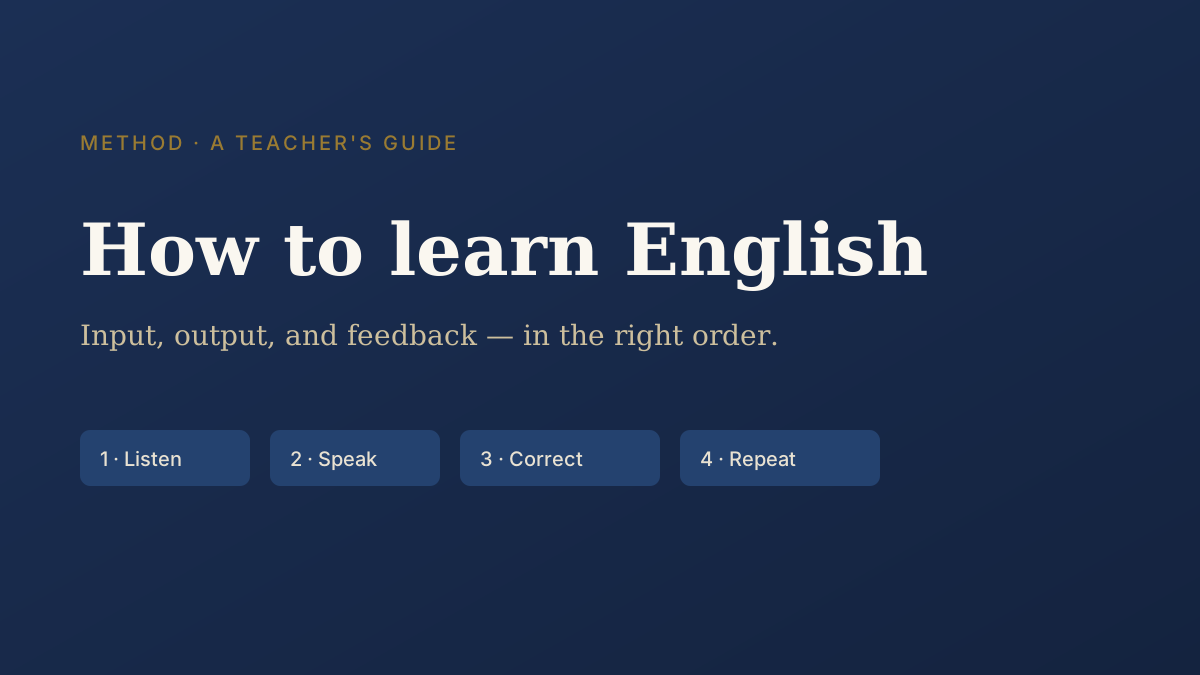
Almost everyone who asks me “how do I learn English?” has already started — and already stalled. They have an app on their phone, a grammar book they bought with good intentions, and a vague sense that they should be watching more series in English. None of that is wrong. The problem is that there is no order to it, and order is most of the battle.
What follows is the exact sequence I give a new adult learner in their first lesson. I have taught it to several thousand people moving from upper-beginner to confident professional English, and it works because each step feeds the next.
- Pick a level target (CEFR B2 for most people) before you pick a method.
- You need far more input — listening and reading — than most learners give themselves.
- The fastest progress comes from output plus correction: speaking and writing that someone actually fixes.
The mistake almost everyone makes
The classic mistake is collecting activities instead of building a system. A new app here, a YouTube channel there, a grammar PDF saved “for later.” It feels like progress because it feels busy. But a learner doing twenty disconnected things badly will always lose to a learner doing four connected things well. The six steps below are those four-or-so things, in the order that makes each one easier.
The fastest learners aren’t the most talented. They’re the ones who get specific, well-timed feedback — and a framework small enough to use in real time.
1. Set a level target, not a vague goal
“I want to be fluent” is not a target; it is a wish. Replace it with a level on the CEFR scale — the same A1-to-C2 scale used by employers, universities and exams worldwide. For most people the right destination is B2: the level at which you can work, study and socialise in English without constantly translating in your head.
Then break B2 into checkpoints — A2, then B1 — so you always know the next small target rather than staring at the whole mountain. A named level also tells you which materials are at your level, which is the single biggest factor in whether input actually helps you (more on that next).
2. Get more input than you think you need
Language is absorbed before it is produced. Before you can say something correctly, you need to have heard and read it many times. The key word is comprehensible: input you understand roughly 80–90% of, so you can guess the rest from context. Too easy and you learn nothing new; too hard and it is just noise.
In practice that means: podcasts and graded readers at your level, series with English subtitles (not subtitles in your own language), and articles on topics you already care about. Aim for input most days. This is the cheapest, most enjoyable part of learning English, and the part learners cut first — which is exactly backwards.
- Learners who logged 4+ hours of input a week reached their next CEFR checkpoint roughly a third faster than those who relied on exercises alone.
- Subtitle language mattered: switching from native-language subtitles to English subtitles was the most common single change in fast-improving learners’ habits.
Based on instructor progress reviews of adult learners across our 2025 cohort. Directional, not a controlled study.
3. Speak from day one
You do not earn the right to speak by first finishing the grammar. Speaking is how the grammar moves from “I recognise it” to “I can use it under pressure.” Waiting until you feel ready is the most common way to stay stuck at intermediate for years.
Start small and low-stakes: read a paragraph aloud, describe your day to yourself, record a one-minute voice note answering a question. The goal at first is not to be correct — it is to make production a daily, normal act so that, when you do get a correction, your brain has something real to attach it to.
4. Learn chunks, not lonely words
Fluent speakers do not build sentences word by word. They reach for ready-made chunks — “to be honest,” “make a decision,” “I was wondering if…” — and slot them in. If you learn vocabulary as single words on a list, you know what they mean but not how they behave, and your English stays slow and slightly off.
So whenever you meet a new word, record it inside a short phrase you would actually say, with one example sentence. Five chunks you re-use beat forty words you only recognise. We wrote a whole guide on this because it is the highest-leverage change most learners can make. More: Learn English Vocabulary in Chunks, Not Lists.
5. Practise little, often, with feedback
Two things decide whether practice turns into progress: how it is spaced and whether it is corrected. Decades of research on the spacing effect show that the same total practice produces stronger memory when spread across many short sessions rather than one long one. And practice without correction is dangerous — it can make you fluent in your own mistakes.
So aim for 20–40 focused minutes most days, not a three-hour Sunday marathon, and build in a way to get corrected: a teacher, a guided track, a language partner who will actually tell you when something sounds wrong. Timely feedback is what turns a repetition into a lesson. More: Feedback Timing Beats Volume.
6. Measure, then adjust
Once a month, do something you can compare over time: write a short text on a fixed topic, or record yourself answering the same three questions. Keep them. Three months apart, the difference is obvious — and where it isn’t, you have found exactly which skill to give more time. This is how you replace the anxious “am I improving?” with evidence.
For the underlying rules of grammar and usage as you go, two free, authoritative references are worth bookmarking. Sources: British Council — English Grammar; Council of Europe — CEFR level descriptions.
What to do today
Don’t rebuild your whole routine tonight. Do three things: name your target level (probably B2), pick one source of input at your level and use it today, and record one short voice note speaking English. That is steps one, two and three already in motion — the rest layers on from there.
When you want input, speaking and correction in one place, our free B1 track is built around exactly this sequence — and it corrects your sentences the way an instructor would.
Frequently asked questions
What is the fastest way to learn English?
There is no shortcut, but there is an efficient order: get plenty of comprehensible input, start speaking immediately, learn vocabulary in chunks rather than isolated words, and practise in short daily sessions with feedback. Learners who get corrected quickly improve far faster than those who simply do more uncorrected exercises.
Can I learn English on my own?
Yes — most of the work is self-study: listening, reading, and reviewing. What you cannot fully replace alone is feedback on your speaking and writing, because practice without correction can lock in errors. Combine independent input with a source of correction, even a free guided track.
How many hours a day should I study English?
For most working adults, 20–40 focused minutes a day, most days, beats one long weekend session. Consistency and spacing matter more than total hours in any single sitting.
What level of English should I aim for?
Use the CEFR scale (A1 to C2). B2 is the practical target for work and study — enough to function confidently in most professional and academic settings. Set that as your destination and break it into A2 and B1 milestones.